Southern dumplings are the kind of food that makes an ordinary Tuesday feel looked after. They are soft, fluffy, and a little rustic, bobbing in savory chicken broth instead of posing for a photograph. I learned to love them after enough batches turned gummy, vanished into the pot, or came out with raw centers. This version is practical: one bowl, ordinary ingredients, and a dough you can fix before dinner is ruined.
The finished dumplings should be tender but not fragile, with a slightly chewy edge where the broth reaches the dough. You do not need a stand mixer, pastry cutter, or specialty flour. A fork, a saucepan, and a little patience will do the job. The dough will forgive you. So will I.
What makes southern dumplings different
There are several regional styles, but southern dumplings often fall into two broad camps. Rolled dumplings are cut into flat strips, while drop dumplings are spooned directly into simmering broth. This recipe uses drop dumplings because they are faster and more forgiving for a weeknight meal. They puff around the outside while staying pleasantly substantial in the middle.
For the broth, use 6 cups of chicken stock, 2 cups of shredded cooked chicken, 1 teaspoon kosher salt, 1/2 teaspoon black pepper, and 1/2 teaspoon dried thyme. Homemade stock is lovely, but a low-sodium boxed stock works perfectly. If the broth tastes flat before the dough goes in, correct it now. Dumplings absorb seasoning, so a timid broth produces a timid bowl.
For the dough, weigh 240 grams all-purpose flour, 2 teaspoons baking powder, 3/4 teaspoon salt, 45 grams cold butter, and 180 grams whole milk. The gram weights are not fussy for the sake of being fussy; they keep the flour from creeping upward and making heavy dumplings. If you only have measuring cups, spoon the flour into the cup and level it rather than scooping directly from the bag.
Make the dough without overworking it
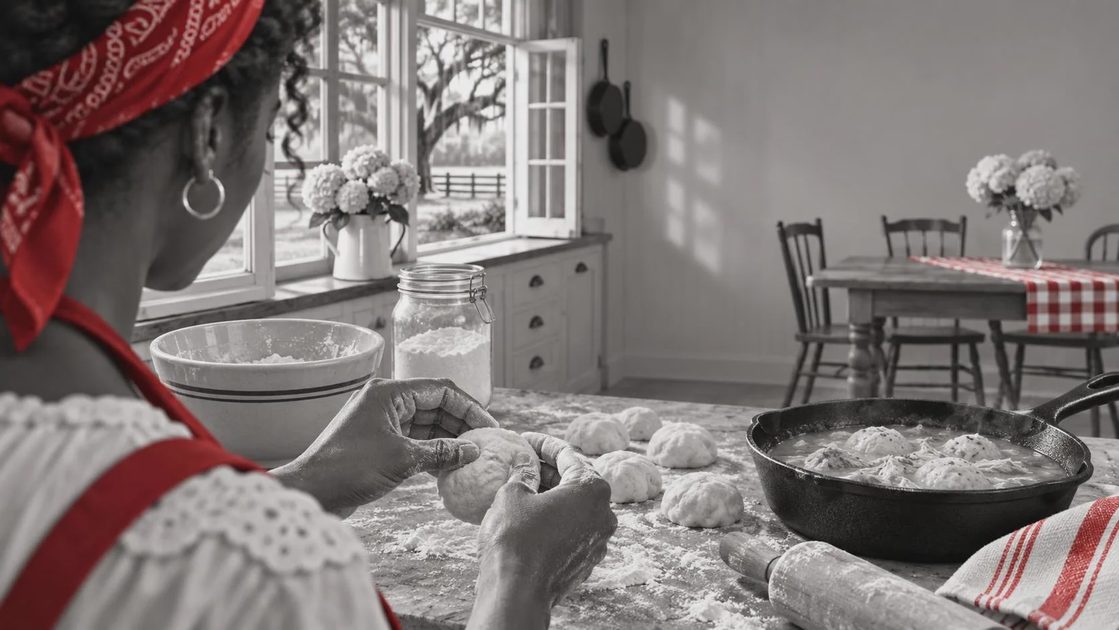
Whisk the flour, baking powder, and salt in a medium bowl. Cut the cold butter into small pieces, then rub it into the flour with your fingertips until the mixture looks like coarse crumbs with a few pea-sized bits remaining. Those butter pieces create small pockets of steam and tenderness. Melted butter will still produce food, but the texture will be less fluffy.
Pour in the milk and stir with a fork just until no dry flour remains. The dough should look shaggy, sticky, and slightly lumpy. Do not knead it like bread. Gluten development is useful in a loaf but makes dumplings tough. If your kitchen is warm and the dough feels loose, let it rest for 5 minutes while the broth heats. If it looks dry, add milk 5 grams at a time, stopping as soon as the flour disappears.
For southern dumplings with a little more flavor, add 1 tablespoon finely chopped parsley or 1/4 teaspoon garlic powder to the dry ingredients. I prefer thyme in the broth and black pepper in the dough because the flavor stays familiar rather than turning into a herb biscuit.
Cook the dumplings gently
Bring the chicken broth to a gentle simmer in a wide pot. It should have small bubbles around the edges, not a violent boil. Stir in the shredded chicken, then drop the dough by rounded tablespoons into the broth. Each dumpling should be about 30 grams, or roughly the size of a walnut. Leave space between them because they expand.
Cover the pot and cook for 12 minutes without lifting the lid. The trapped steam helps the tops cook while the broth gently cooks the bottoms. After 12 minutes, remove the lid and test the largest dumpling with a toothpick. It should come out with a few moist crumbs, not wet batter. If the center is still raw, cover the pot and cook for another 3 minutes.
The most common mistake with southern dumplings is stirring too aggressively after they enter the pot. They are not pasta. Use a spoon to nudge them apart during the first minute, then leave them alone. Constant stirring tears the surface and clouds the broth with loose dough.
The failure modes I actually see
If your dumplings dissolve, the broth was probably boiling too hard, the dough was too wet, or the lid came off repeatedly. A rolling boil knocks the pieces apart before they set. Lower the heat until the surface barely moves, and use a slightly smaller milk amount next time. A 10-gram reduction can make a noticeable difference.
If they are dense, the flour was overmeasured or the dough was mixed too much. This is the batch where people often blame the baking powder, but compact handling is usually the culprit. Stir only until combined and measure the flour by weight. If the dumplings are gummy inside, they simply need more covered cooking time. Cut one open before serving; a pale, wet center is not a charming rustic detail.
If your broth becomes too thick, remove the chicken and dumplings to bowls, then whisk 120 grams hot stock into the pot. Return the food once the consistency is loose enough to pour. Southern dumplings should sit in gravy-like broth, not a paste that holds a spoon upright.
A simple dinner plan and useful swaps
Start with cooked chicken from a roast bird, leftover thighs, or two boneless breasts poached in the stock. Dark meat stays juicier, but either works. If you are cooking from raw, simmer 450 grams chicken thighs in the broth for 20 to 25 minutes, shred them, and return the meat to the pot before adding the dough.
You can replace up to 60 grams of the all-purpose flour with whole-wheat flour, though the dumplings will be a little heavier. Buttermilk works in place of whole milk and adds a gentle tang; use 180 grams and expect a slightly softer dough. Do not swap in self-rising flour without reducing the baking powder and salt, because the measurements vary by brand.
For a vegetable-heavy bowl, add 100 grams diced carrots and 75 grams chopped celery to the broth and simmer them until nearly tender before adding the dumplings. Frozen peas belong at the very end, stirred in for the final 2 minutes. This keeps them green and prevents the pot from becoming a beige, overcooked mystery.
How to serve and store them
Serve the dumplings immediately with chopped parsley, plenty of black pepper, and a small spoon for the broth. I like a sharp green salad beside them because the fresh crunch balances the soft, rich texture. Cornbread is delicious too, although it turns this into a very serious carbohydrate situation. That is not a moral failure; it is dinner.
Leftovers keep in a covered container in the refrigerator for up to 3 days. The dumplings will absorb broth overnight, so reheat them gently with 60 to 120 grams extra stock per serving. Use medium-low heat and stir around the edges rather than smashing the dumplings. Freezing is less successful because the cooked dough can become spongy after thawing, but the chicken broth itself freezes well before the dumplings are added.
The best southern dumplings are not perfectly identical. One may lean against another, and the tops may wrinkle a little. What matters is a tender center, seasoned broth, and a meal that tastes like you meant to make it. Put on the apron and go ahead and do it. It does not matter if it is perfect or not, just make it delicious.
No comments yet.