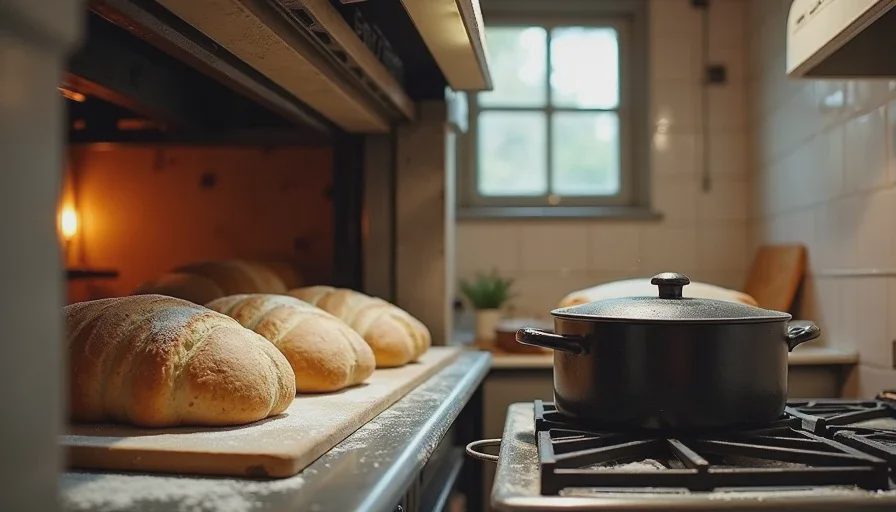
The first time I baked the same dough formula in the bakery and then at home, the results were almost unrecognizable. In the deck oven the loaf opened with a high ear, deep color, and an open crumb. In my home oven the same dough spread, browned unevenly, and stayed denser. I had followed every step. The only real variable was the oven.
Gérard never softened the truth about this gap. “The oven is half the bread,” he would say while loading eighty loaves at once. He was right. Understanding what a commercial oven does that a home oven cannot is the difference between endless frustration and loaves that actually improve.
The physical differences that matter
A bakery deck oven has thick stone or ceramic hearths that store enormous heat. When you load dough, the temperature drops only a few degrees and recovers fast. Steam is injected in controlled bursts at the beginning of the bake. The top and bottom heat can be set independently. The environment is sealed and intense.
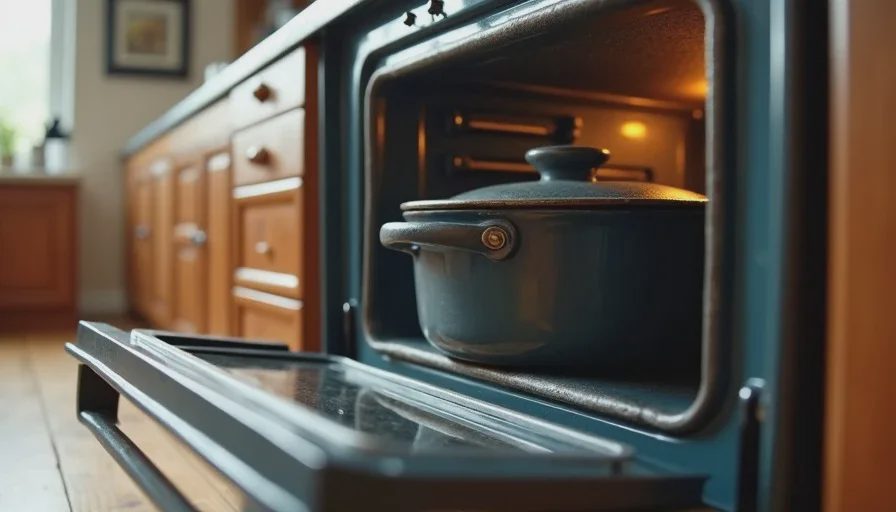
A home oven is a small metal box with heating elements. Open the door and you lose a lot of heat. There is no real steam injection. The temperature cycles up and down more dramatically. Most home ovens also have hot spots—mine runs hotter on the left side and near the top element.
At Denver elevation the difference is slightly amplified. Water boils at a lower temperature, so moisture leaves the dough a little faster. The same bake that works at sea level can finish drier or with less oven spring if you do not adjust.
These are not small gaps. They change how dough behaves in the first ten minutes of the bake—the window that decides most of the final shape and crumb.
What actually translates
Dough strength and fermentation.
A well-fermented, properly strengthened dough is still a well-fermented, properly strengthened dough. The oven cannot fix under-proofed or over-proofed bread. If the dough feels right at the end of bulk and after cold proof, you have already done the hardest part. That knowledge carries straight across.
Scoring principles.
Angle, depth, and a single decisive cut still control where the loaf opens. In a home oven the spring is usually less explosive, so a slightly deeper score (closer to ¾ inch in the center) often works better than the shallow cuts used in a high-steam deck oven. The logic stays the same.
Shaping tension.
Surface tension still matters. A tight shape holds its form longer while the oven struggles to recover heat. Loose shaping shows more in a home oven because there is less immediate oven spring to lift a slack loaf.
Cooling.
The rule does not change. Cut too early and the crumb is gummy. Two hours on a rack is still the minimum for a clean slice.
What does not translate (and what to do instead)
Steam.
Commercial ovens flood the chamber with steam for the first 10–15 minutes. This keeps the surface expandable so the loaf can spring fully before the crust sets. At home you will never match that volume of steam. The practical substitute is a preheated Dutch oven or heavy lidded pot. The trapped moisture from the dough itself creates a mini steam chamber. It is not identical, but it is the closest reliable method most home bakers have.
If you do not own a Dutch oven, a metal bowl inverted over the loaf on a baking stone can help for the first half of the bake. Results are less consistent, but better than nothing.
Thermal mass and recovery.
A deck oven barely notices when you load dough. A home oven notices a lot. This is why a full 45–60 minute preheat with the Dutch oven inside is non-negotiable. I put the pot in cold and let the whole thing come up to temperature together. Opening the door only once—to load—preserves more heat than repeated checks.
Bottom heat.
Deck ovens push strong heat from the hearth. Home ovens are weaker from below. If your loaves brown too fast on top and stay pale underneath, lower the rack one level or reduce the top-heat bias if your oven allows it. Some bakers place a second stone or heavy tray on a lower rack to create more residual heat. I have done this on stubborn ovens and it helps.
Temperature settings.
Bakery recipes often list 460–500°F. At home I usually start at 450°F covered, then drop to 425–430°F after removing the lid if the crust is taking on color too quickly. The interior still reaches 205–210°F. Chasing the exact bakery number often just burns the outside before the inside finishes.

Practical home routine that borrowed the useful parts
I still mix, fold, shape, and cold-proof exactly as I did in the bakery. The changes begin at bake time:
Dutch oven preheated a full hour at 450°F.
Loaf scored straight from the fridge.
Loaded carefully, lid on immediately.
20 minutes covered, then 20–25 minutes uncovered.
Color and internal temperature decide the end, not the clock alone.
If the ear is smaller than bakery loaves, I accept it. Flavor and crumb matter more.
Hydration sometimes needs a small downward nudge at home. A dough that feels perfect in a steamy deck oven can spread more in a drier home environment. Dropping 2–3 % hydration (10–15 g less water on a 500 g flour dough) often gives cleaner shape without sacrificing much openness.
The honest trade-off
You will probably never get the exact same ear height or crust shatter that a deck oven produces. That is not failure. It is physics. What you can get is excellent flavor, solid oven spring, and a crumb that is open enough to make good toast and better sandwiches. Most of the people eating your bread will never know the difference. They will only know whether it tastes like something worth eating.
The bakery taught me speed, consistency, and how far a strong dough can go. Home baking taught me patience with equipment that has limits. Both matter. When a loaf comes out of my home oven with a decent rise and a deep brown crust, I still think of Gérard’s line about the oven being half the bread. The other half is still yours—the fermentation, the strength, the decision to score cleanly and then leave the door closed.
Translate what actually moves the needle. Adjust for the rest. The dough does not care whether the heat came from a twenty-thousand-dollar deck or a Dutch oven on a Tuesday night. It only cares that the heat was there when it needed it.


No comments yet.