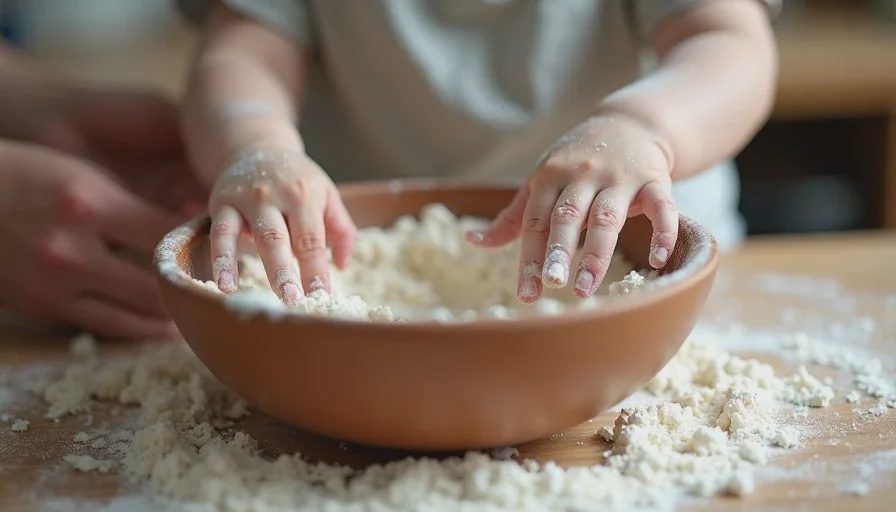
Lily is three and a half. She believes flour is a sensory activity first and an ingredient second. When we bake together the counter ends up white, the floor needs sweeping twice, and the finished cookies or loaf rarely look like the ones I make alone. I used to try to keep the process neat and the results impressive. That version of baking with her made both of us tense. This version is better.
We still bake. We just bake differently.
What she can actually do
At this age she can pour pre-measured ingredients if the bowl is stable. She can stir with a wooden spoon if I hold the bowl. She can sprinkle chocolate chips or berries with moderate accuracy. She can press a cookie cutter into dough and lift the shape with help. She can brush egg wash with more enthusiasm than precision. She can taste-test with great commitment.
She cannot crack eggs cleanly. She cannot be trusted with the scale when numbers matter. She cannot wait patiently through a full bulk fermentation. She cannot resist touching the dough after I have shaped it carefully. These are not moral failings. They are developmental facts. Planning around them prevents most of the frustration.
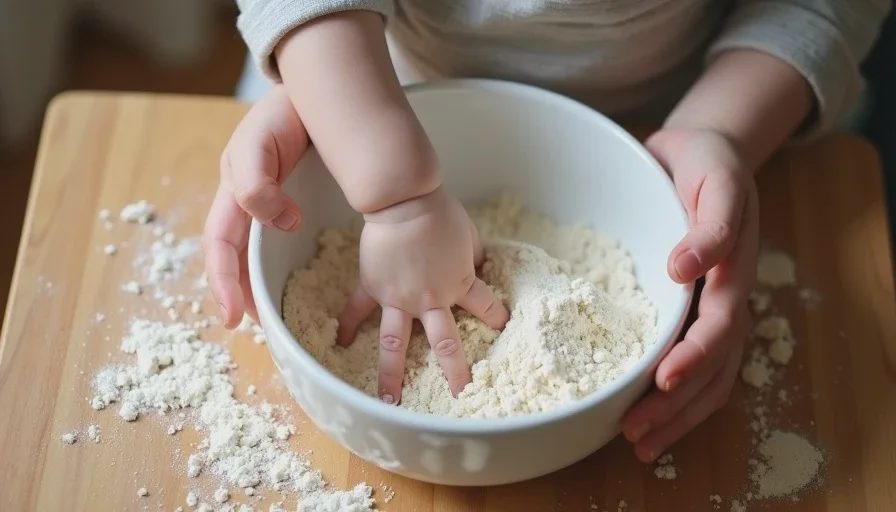
I measure the important things before she pulls the step stool over. Flour, water, salt, and starter go into bowls she can pour. The scale stays out of the main action unless we are doing something low-stakes like cookies where a few extra grams of chocolate only make things better. When we make the gram-weight cookies, I let her help with the chips and the scooping. When we make sourdough, her involvement is shorter and more contained.
The mess is not optional
Flour will reach the floor. Dough will stick to fingers and then to the front of her shirt. A spoonful of starter will drip. I used to clean as we went and try to keep the session tidy. Now I spread a sheet or an old towel under the stool, accept the radius of chaos, and do one real cleanup at the end. The difference in my shoulders is noticeable.
The mess bothers me less when I remember that she is learning the feel of dough and the smell of yeast and the fact that food comes from a process, not just a package. Those lessons do not happen in a spotless kitchen. They happen in the middle of the flour cloud.
I also stopped taking process photos while she is actively helping. The camera makes me want things to look intentional. She makes things look like a three-and-a-half-year-old was there. Both can be true on different days. When we bake together, the second truth wins.
Timing belongs to her
A toddler’s attention for structured activity is limited. Twenty to thirty minutes of real participation is a solid session. After that she is done, or she is done with the useful part and has moved into experimental dumping. I plan the bake so that her involvement happens in a short, active window. Mixing, adding mix-ins, shaping simple cookies, or decorating. The long rests, the folding schedule, and the oven work stay with me.
If the dough needs a two-hour bulk, she helps at the beginning and then we go do something else. If cookies need to chill, we make the dough together and bake them later or the next day. Trying to keep her engaged through every stage turns the session into a negotiation. Ending her part while it is still successful keeps the feeling good for both of us.
What I stopped needing
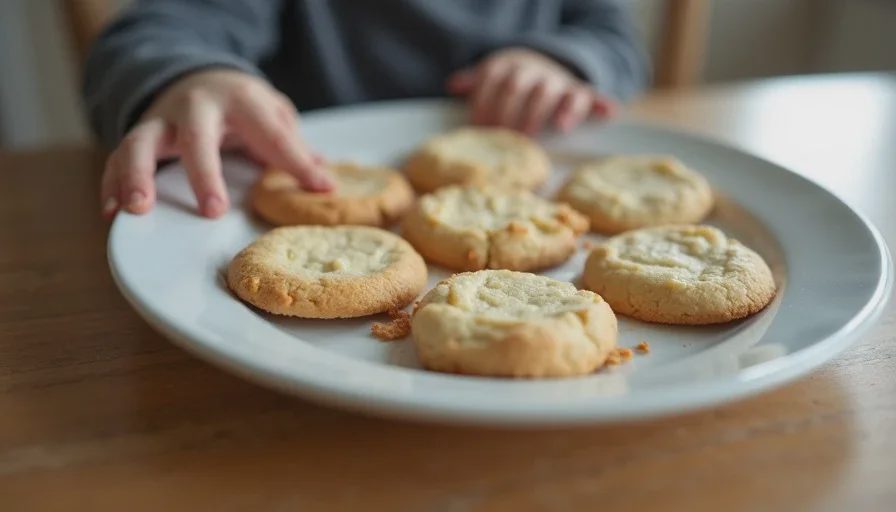
I stopped needing the finished product to justify the time. Some of the cookies are misshapen. Some of the small hand pies leak. The loaf we “shaped together” sometimes has an extra dimple from a small finger. We still eat them. She is proud of them. That is enough on the days we bake together.
I stopped needing silence or focus. She talks the entire time. She asks why the yeast is foamy, why the dough is sticky, why she cannot eat the chocolate chips before they go in. Some of the answers are simple. Some I simplify further. The conversation is part of the activity.
I stopped needing to finish at a specific time. If she needs a snack break or a sudden trip to the bathroom or a full costume change mid-mix, the dough can usually wait. Sourdough is especially forgiving of small delays. Using that flexibility keeps the mood lighter.
What still matters
Safety stays non-negotiable. Hot oven, sharp tools, and raw eggs are adult jobs. She knows the oven is my part. She can watch from a safe distance when something goes in or comes out.
Basic hygiene stays in place. We wash hands before we start and after we handle eggs or raw dough. She thinks the hand-washing is its own activity, which helps.
The relationship between effort and result stays visible. She sees that the dough we mixed becomes cookies. She sees that the starter we fed last night is bubbly today. Those connections are worth the flour on the floor.
The quieter benefits
Baking together gives her a way to help that feels real. It gives me a way to be present with her that is not built around toys or screens. It gives both of us a shared smell and taste memory that belongs to this kitchen. None of that requires perfect technique or a perfect final photo.
Some days I bake alone while she naps or plays in the other room. Those loaves and cakes are cleaner and more consistent. I need those days too. The days we bake together serve a different purpose. They are messier, slower, and less precise. They are also the ones she talks about afterward.
Flour everywhere is not a sign that the session failed. It is a sign that a small person was allowed to participate. I sweep it up. I wipe the counter. I leave the slightly uneven cookies on the plate. She takes one and tells me she made it. That is the part that keeps working.
The dough will forgive the extra handling and the irregular timing. So will I. The floor is just floor. It can handle the flour.


No comments yet.