
Can you use quick oats instead of rolled oats? Usually, yes. I have made this swap more times than I can count, especially when Lily has already opened the last bag of old-fashioned oats and I am halfway through mixing oatmeal cookies. The recipe will not always turn out exactly the same, but it can still be delicious. The important question is what the oats are doing in the recipe: adding chew, absorbing moisture, thickening a mixture, or forming a crisp topping.
Quick oats and rolled oats are not identical
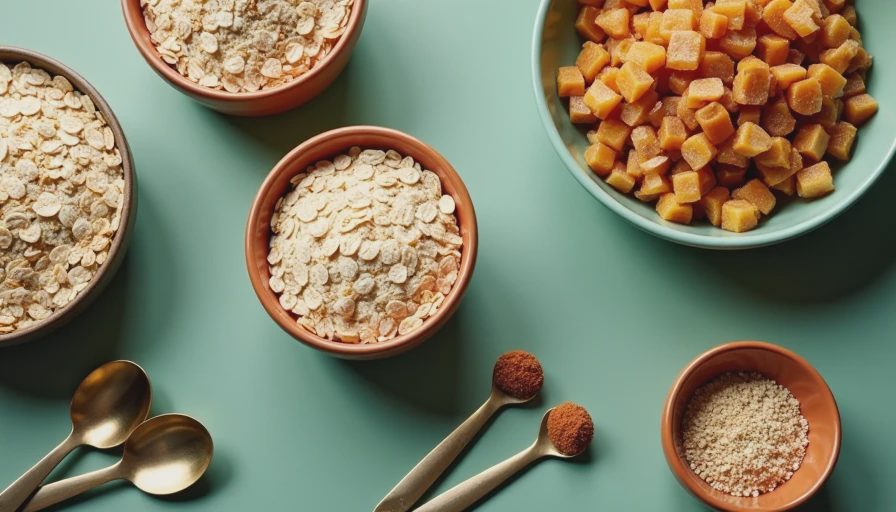
Rolled oats, also called old-fashioned oats, are whole oat groats that have been steamed and flattened into broad flakes. Quick oats start with the same basic grain, but they are cut into smaller pieces and rolled thinner. That extra processing gives them more surface area, so they soften and absorb liquid faster.
That difference matters in the bowl. Rolled oats stay recognizable after baking and give cookies a pleasantly nubby, chewy texture. Quick oats blend into the mixture more easily and create a softer, more uniform bite. Neither one is automatically better. They simply produce different results.
If a recipe calls for 100 grams of rolled oats, use 100 grams of quick oats by weight. Do not replace them by volume if you can avoid it, because a cup of one type can pack differently from a cup of the other. A kitchen scale removes that small but irritating variable.
For a standard batch of cookies, the swap is generally straightforward. Quick oats can make the dough look wetter at first, then noticeably thicker after five to ten minutes. Give the oats time to hydrate before adding extra flour. I learned this after one batch of chocolate chip oatmeal cookies turned into dry little hockey pucks because I panicked and added another 30 grams of flour.
Can you use quick oats instead of rolled oats in cookies?
Can you use quick oats instead of rolled oats in cookies? Yes, particularly in soft oatmeal cookies, breakfast cookies, peanut butter cookies, and bars. The finished cookie will usually have less visible oat texture and a more tender, compact crumb. If you prefer a cookie with distinct flakes and plenty of chew, rolled oats are the better choice.
The biggest risk is overmixing or overbaking. Because quick oats absorb moisture quickly, the dough can become stiff while it rests. Mix only until the flour disappears, then let the dough stand for five minutes. If it feels scoopable but not crumbly, bake it. If it is so firm that your scoop cracks the dough, stir in 5 grams of milk at a time until it loosens.
Watch the oven rather than waiting for a deeply golden top. Quick-oat cookies can look finished around the edges while the centers are still soft, which is exactly what you want. Let them cool on the baking sheet for 8 to 10 minutes so the middle can set without losing its chew.
What happens in muffins, cakes, and quick breads?
Can you use quick oats instead of rolled oats in muffins? In most recipes, yes. Quick oats disappear more into the batter, so muffins made with them tend to have a softer, less rustic texture. This is useful when you want a tender blueberry muffin or an apple muffin without obvious oat flakes.
For oat muffins, soak the oats in the recipe's milk for 10 minutes before mixing the batter. This gives the flakes time to hydrate evenly and prevents a dry patch in the finished muffin. If the original recipe uses 120 grams of rolled oats, use 120 grams of quick oats and begin with the listed liquid. Only add more milk if the batter is unusually thick after resting.
In a cake, quick oats are usually best when the recipe expects them to be blended or ground. A quick oat can soften into the crumb, but it will not become completely invisible. For a smooth texture, pulse the oats in a food processor for 20 to 30 seconds and weigh them afterward. Do not keep grinding until they become oat flour unless the recipe specifically asks for it.
Granola, streusel, and no-bake recipes need more care
Can you use quick oats instead of rolled oats in granola? You can, but this is where I would pause before making the swap. Rolled oats create the broad, crisp clusters that make granola feel like granola. Quick oats absorb the oil or syrup faster and tend to produce a finer, more compact mixture. The flavor remains good, but the texture can be less crunchy.
For a topping, combine quick oats with nuts or seeds so the mixture has larger pieces. Bake at 325 degrees Fahrenheit and stir once halfway through. Spread the mixture thinly on the pan; a thick layer traps steam and leaves the oats soft. Let it cool completely before judging the crunch. Granola becomes noticeably crisper as it cools.
In no-bake cookies or bars, quick oats are often the easier option. They soften quickly and hold together well with peanut butter, honey, or melted chocolate. Rolled oats can leave the mixture chewy and difficult to slice. If using quick oats, reduce the resting time only slightly, because the mixture still needs several minutes to firm up.
When should you not make the substitution?
Can you use quick oats instead of rolled oats in every recipe? No. I would avoid the swap when the oat shape is central to the result. Granola clusters, baked oatmeal with a textured top, oat crumble, and certain hearty breads benefit from the larger flakes. Quick oats can make these recipes seem dense or pasty instead of pleasantly rustic.
Be especially careful with recipes that use oats as a structural ingredient. In a crumble topping, large flakes help create a crisp layer over fruit. In a savory oat loaf, the oats contribute chew and visible texture. Replacing all of them with quick oats may make the mixture softer and less distinct. A half-and-half substitution is a safer compromise if you are working with what is in the pantry.
Also check whether the oats are instant oats. Instant oats are even finer and may contain added salt, sugar, or flavoring. They are not the same as plain quick oats, so the label matters.
My practical substitution method
When I am deciding whether can you use quick oats instead of rolled oats, I use a simple five-step check. First, weigh the same amount of oats called for in the recipe. Second, identify whether the oats need to stay visible. Third, mix the quick oats with the recipe's liquid and wait five minutes. Fourth, judge the consistency before adding extra flour or liquid. Finally, bake one test portion if the recipe is large or expensive.
For cookies, the test portion is one scoop. For muffins, it is one muffin baked in a small ramekin or spare muffin cup. This tells you more than staring at the batter and hoping. If the test bake is dry, add 5 to 10 grams of milk to the remaining mixture. If it spreads too much, chill the dough for 20 minutes before baking.
The failed batch I remember most had quick oats, whole-wheat flour, and a very enthusiastic extra pour of maple syrup. The oats absorbed everything, the dough barely spread, and the cookies stayed thick and tough. The fix was not more butter or more syrup; it was weighing the ingredients and giving the oats time to hydrate. The dough will forgive you. So will I.
Can you use quick oats instead of rolled oats? Yes, for most cookies, muffins, bars, and no-bake treats, with a softer and finer texture as the trade-off. Keep rolled oats for recipes where visible flakes and crunch are the point. Put on the apron and go ahead and do it. It does not matter if it is perfect or not, just make it delicious.


No comments yet.