If you have ever stood in the dairy aisle holding a pint of cream while a recipe says “add 1 cup,” you are not alone. Knowing how much heavy whipping cream a recipe needs becomes especially useful when you are scaling a cake, making ganache, or trying to use the last of an open carton before it turns sour. Here is the practical answer, with weights included so you can stop guessing.
The basic heavy cream conversions
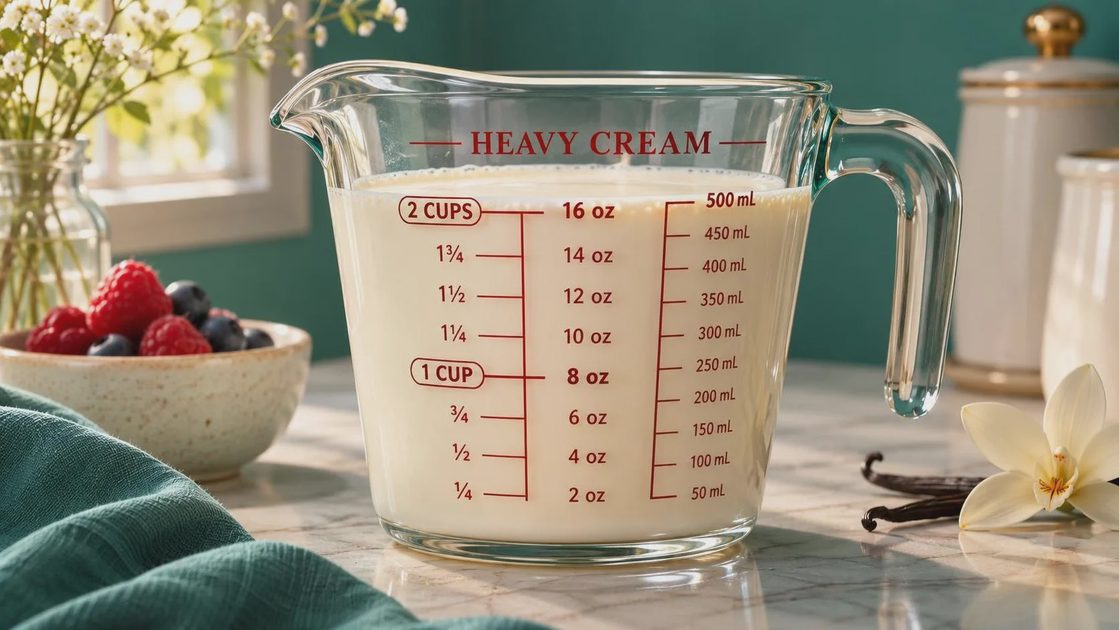
For most recipes, 1 cup of heavy whipping cream weighs about 240 grams. A half cup is approximately 120 grams, and a quarter cup is about 60 grams. These are the numbers I use in my own kitchen when a recipe gives volume measurements but my scale is already sitting beside the mixer.
One tablespoon weighs close to 15 grams, while one teaspoon is about 5 grams. A standard pint container holds 2 cups, or roughly 480 grams. A half-pint carton usually contains 1 cup, or about 240 grams. Package sizes vary slightly by brand, so the printed fluid-ounce amount is the best final check.
The word “heavy” matters here. Heavy whipping cream generally contains at least 36 percent milk fat, which lets it whip into a stable, fluffy mixture. Regular whipping cream has slightly less fat and can still work, but it may take longer to whip and produce a softer result. Half-and-half is not a direct substitute for either one because it has far less fat.
When a recipe says 8 fluid ounces, that is a volume measurement equal to 1 cup, not necessarily 8 ounces by weight. This distinction trips up plenty of experienced bakers. Cream is lighter than water, so 1 cup weighs about 8.5 ounces, or approximately 240 grams.

How much heavy whipping cream for common recipes
How much heavy whipping cream you need depends on whether the cream is an ingredient, a sauce base, or something you are whipping for serving. A chocolate ganache often uses equal weights of chopped chocolate and warm cream. For example, 200 grams of chocolate and 200 grams of cream creates a fairly soft ganache. For a firmer filling, increase the chocolate to 300 grams while keeping the cream at 200 grams.
A batch of homemade whipped cream usually starts with 1 cup, or 240 grams, of cold cream. Add 2 tablespoons of powdered sugar, about 15 grams, plus 1 teaspoon of vanilla. This makes enough for roughly 8 modest servings of pie or hot chocolate. For a layer cake, I usually whip 2 cups, or 480 grams, because a thin layer looks sad and disappears after the first slice.
For a cream sauce serving four people, 1 cup is a reasonable starting point. Reduce it gently with garlic, grated Parmesan, black pepper, or herbs until it coats a spoon. If you are enriching a soup, 1/2 cup often adds a creamy finish without making the whole pot taste like dairy. Add it near the end and avoid a hard boil, which can cause curdling or a greasy-looking surface.
Scaling cream without wrecking the recipe
The easiest way to scale a recipe is to multiply every ingredient by the same factor. If a tart recipe uses 3/4 cup of cream and you want half the batch, use 3/8 cup, or 90 grams. That is much easier to measure on a scale than trying to eyeball three-eighths of a cup.
For a recipe that serves six but you need dessert for ten, multiply each ingredient by 10 divided by 6, or 1.67. A recipe using 180 grams of cream would then need about 300 grams. Do not round every ingredient in the same direction. Small differences in sugar or flour can add up, especially in custards and pastry creams.
This is where weighing cream saves a lot of frustration. Measuring cups can leave a layer clinging to the sides, and a hurried pour can put 20 or 30 grams more into a small custard. That extra liquid can mean a filling that stays loose after chilling. I learned this the messy way with a lemon tart that slumped across the plate. It tasted good, but it needed a spoon.
What to do with leftover heavy cream
If you have 2 or 3 tablespoons left, use it in scrambled eggs, mashed potatoes, oatmeal, or a small pan sauce. A few spoonfuls also make a difference in a biscuit dough, though reduce another liquid slightly so the dough does not become sticky.
For larger leftovers, freeze the cream in tablespoon portions or in an ice cube tray. Frozen cream can separate after thawing, so it is better for soups, sauces, baked goods, and cooked fillings than for whipping. Label the container with the date and amount. Cream stored in the refrigerator should stay tightly covered, and use your senses: sour smell, unusual lumps, or a swollen container means it belongs in the trash.
You can also make cultured-style cream by stirring a small amount of plain yogurt into fresh cream and leaving it covered at room temperature for several hours, but this is a deliberate fermentation project, not a rescue method for cream that is already questionable. Start with fresh ingredients and refrigerate the finished mixture.
Common mistakes and the fixes
If whipped cream refuses to thicken, the bowl or cream may be too warm. Chill both for 15 minutes, then whip again at medium speed. Starting at maximum speed can create large bubbles and make it easier to overshoot into grainy cream. Stop when the peaks hold their shape. If the cream looks curdled but still smells fresh, fold in 1 tablespoon of unwhipped cold cream and stir gently by hand.
If a sauce breaks, remove it from the heat immediately. Whisk in 1 or 2 tablespoons of cold cream or water, one teaspoon at a time. A lower cooking temperature and occasional stirring prevent many problems. For custards, the bigger danger is overheating: eggs set around the edges first, creating little cooked flecks. Strain the mixture before baking if you see them.
When a recipe calls for cream but your carton is short, do not automatically replace the missing amount with milk. In a sauce, milk will make the result thinner. In whipped cream, it will not whip properly. For a cooked dish, use half-and-half if you have it, then simmer a little longer. For a dessert that depends on fat for structure, buy another carton.
A quick decision before you measure
First, read whether the recipe means liquid cream, whipped cream, or a reduced cream sauce. One cup of liquid cream does not equal one cup of whipped cream by weight or volume once air has been incorporated. Next, check whether the recipe lists grams, cups, or fluid ounces, and use the same system throughout. Finally, measure the cream cold when whipping and at the temperature specified when cooking.
How much heavy whipping cream you need is usually simple: 240 grams per cup, 120 grams per half cup, and 60 grams per quarter cup. For a dependable everyday batch of whipped cream, start with 240 grams. For a family-size dessert, use 480 grams. Keep the cream cold, weigh it when accuracy matters, and do not panic if the finished bake has a crack or a slightly lopsided edge. It does not matter if it is perfect or not, just make it delicious.

No comments yet.