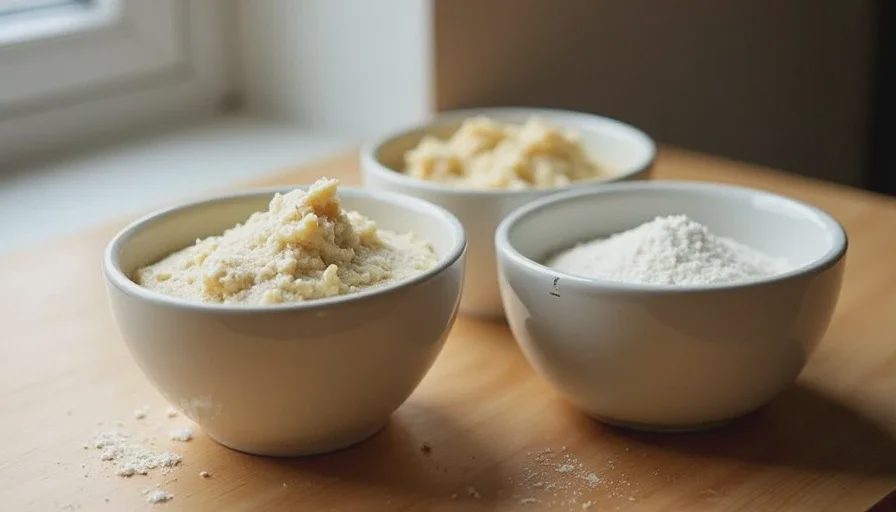
I used to treat leavening as a single category. Something makes the dough rise, and the rest is detail. That approach caused a lot of unnecessary confusion. Commercial yeast, sourdough starter, and chemical leaveners (baking powder and baking soda) produce gas in different ways, on different timelines, and with different effects on flavor and texture. Once I sorted them into separate tools instead of interchangeable magic, recipes became easier to read and troubleshoot.
This is the practical comparison I use when I decide what belongs in a dough or batter.
Commercial yeast: fast, predictable, clean-tasting
Instant yeast and active dry yeast are concentrated, selected strains of Saccharomyces cerevisiae. They are dormant until they meet moisture and a comfortable temperature. Once active, they consume simple sugars and release carbon dioxide and ethanol. The gas inflates the dough. The ethanol mostly bakes off.
Instant yeast can be mixed straight into the flour. Active dry yeast prefers to be dissolved in liquid first, though modern granules are more forgiving than older versions. Both are reliable across a fairly wide temperature range and give consistent rise times when the dough is kept around 75–78°F.
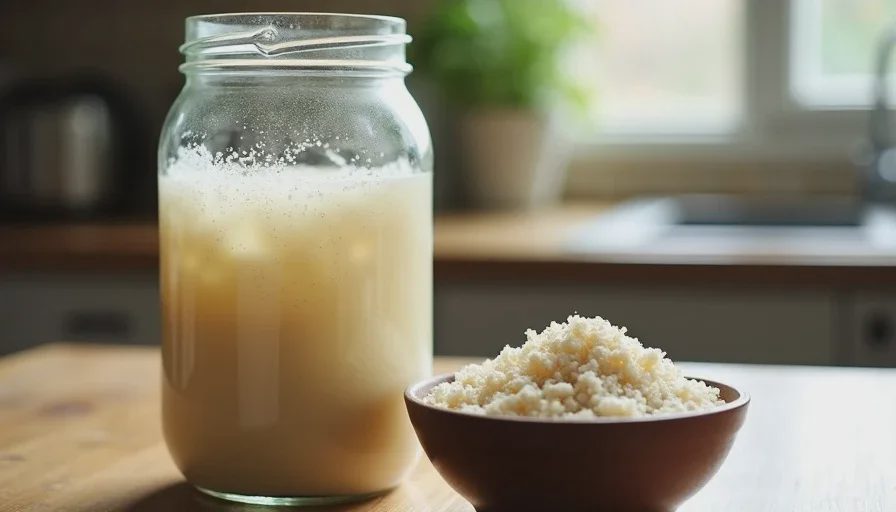
Flavor contribution is relatively mild. You get the classic “yeasted bread” taste without the acidity or complexity of a long-fermented starter. This makes commercial yeast ideal for sandwich loaves, dinner rolls, cinnamon buns, and any bread where you want speed and a neutral baseline. A typical bulk fermentation might take 1–2 hours instead of 4–6.
The main limitations are flavor depth and fermentation tolerance. Because the yeast works quickly, there is less time for enzymes to break down starches and proteins. The dough develops less organic acidity. If you need a long cold proof for scheduling reasons, commercial yeast can still work, but the flavor will not evolve the same way a starter dough does.
I reach for instant yeast when I want bread the same day and do not need sourness. It is also the more forgiving choice when teaching someone new to dough.
Sourdough starter: slower, more complex, living culture
A starter is a mixed culture of wild yeast and lactic acid bacteria living in a flour-and-water paste. The yeast produces gas, just as commercial yeast does. The bacteria produce organic acids (mainly lactic and acetic). Those acids lower the pH, strengthen gluten over time, improve keeping quality, and create the tangy flavor people associate with sourdough.
Because the microbial population is less concentrated and more diverse than commercial yeast, fermentation is slower and more sensitive to temperature and feeding history. A healthy starter that doubles in 4–8 hours at room temperature can leaven a loaf beautifully. A neglected or cold starter will leave the dough dense.
The longer timeline is both the cost and the benefit. Extended fermentation develops flavor and can make the bread easier for some people to digest. It also requires planning. You cannot decide at 5 p.m. that you want a starter-leavened loaf for dinner and expect success unless the starter is already peaked and the dough is already in progress.
Starter is not simply “natural yeast.” The bacterial side is doing as much work as the yeast side. That is why a dough made with starter tastes different from the same dough made with commercial yeast, even when both rise fully.
I use starter when I want the flavor, the keeping quality, and the texture that come from long fermentation. I accept that the schedule is less flexible.
Baking powder and baking soda: chemical, immediate, batter-friendly
These are chemical leaveners. They do not rely on living organisms. Baking soda (sodium bicarbonate) needs an acid and moisture to produce carbon dioxide. Baking powder already contains both the bicarbonate and one or more acid salts. When it gets wet, and again when it gets hot, it releases gas.
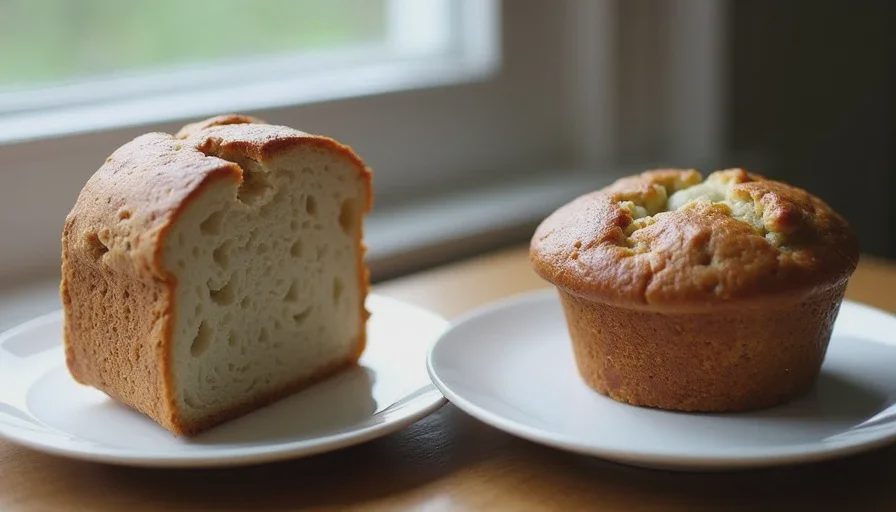
The reaction starts as soon as the batter is mixed and finishes in the oven. There is no bulk fermentation. There is no flavor development from microbes. The rise is rapid and then done. This is why muffins, cakes, quick breads, and most cookies use chemical leaveners. The method matches the short timeline and the tender crumb those recipes want.
Baking soda without enough acid leaves a soapy or metallic taste. Baking powder is more self-contained but can still taste chemical if you use far too much or if it is old and has lost potency. Neither contributes the structural or flavor benefits of a long yeasted fermentation. They simply inflate the batter before the structure sets.
I use chemical leaveners for anything that should be mixed and baked within an hour. They are the wrong tool for a crusty loaf of bread that needs an open crumb and complex flavor.
What you can and cannot swap
Commercial yeast can replace starter in many bread recipes if you adjust timing and accept the flavor change. Use roughly 1–2 % instant yeast on flour weight and shorten the bulk dramatically. The dough will rise, but it will not taste like sourdough.
Starter can replace commercial yeast, but you must give it time and a healthy, active culture. A straight 1:1 substitution by weight rarely works without schedule changes.
Neither yeast nor starter can replace baking powder in a cake or muffin recipe and produce the same result. The timeline and the desired crumb are too different. Chemical leaveners cannot replace yeast or starter in a yeasted bread and give you an open, chewy crumb. The gas arrives too early and the structure is wrong.
You can combine them in limited ways. Some bakers add a small amount of commercial yeast to a starter dough for insurance. Some quick breads use both baking powder and a little yeast for hybrid texture. These are deliberate techniques, not casual substitutions.
How I choose on a given day
If I want bread tonight and the starter is not ready, I use commercial yeast.
If I want flavor and have the time, I use starter.
If I want cake, muffins, or cookies, I use baking powder or soda and do not involve yeast at all.
The three tools solve different problems. Treating them as interchangeable is the fastest way to end up with dense bread or soapy cake. Treating them as separate options with clear strengths makes the decision simple.
Temperature, flour, and time still matter for each of them, but the fundamental difference is the source of the gas and the speed at which it arrives. Once that distinction is clear, the rest of the recipe makes more sense. You stop fighting the leavener and start using the one that matches the result you actually want.

No comments yet.