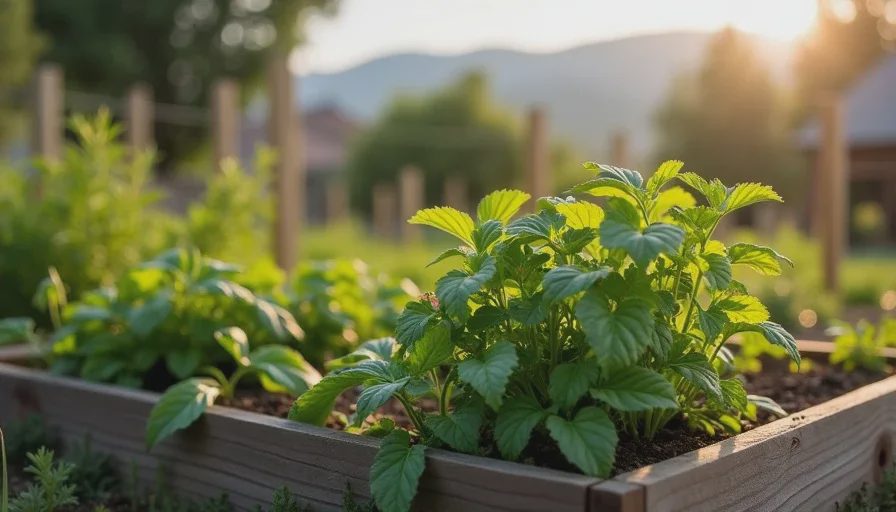
The garden behind our house is not large and it is not tidy. Some years the tomatoes sulk until late August. Some years the raspberries take over the path. The rosemary and thyme I use in recipes come from plants that have survived both neglect and over-attention. I used to treat the garden the same way I once treated dough: check the calendar, expect progress on schedule, and feel frustrated when the living thing in front of me had other plans.
That approach failed in both places. The garden taught me the more useful habit first. Once I learned to watch the plants instead of the date, the same shift improved every bulk fermentation and final proof I ran in the kitchen.
Plants do not care about your timeline
I planted according to the average last-frost date for Denver and then watched the weather ignore the average. A cold stretch would stall the seedlings. An early heat wave would push the peas to flower before they had real height. Checking the seed packet and insisting on the printed days-to-maturity did nothing. The only information that mattered was what the actual plants were doing that week.
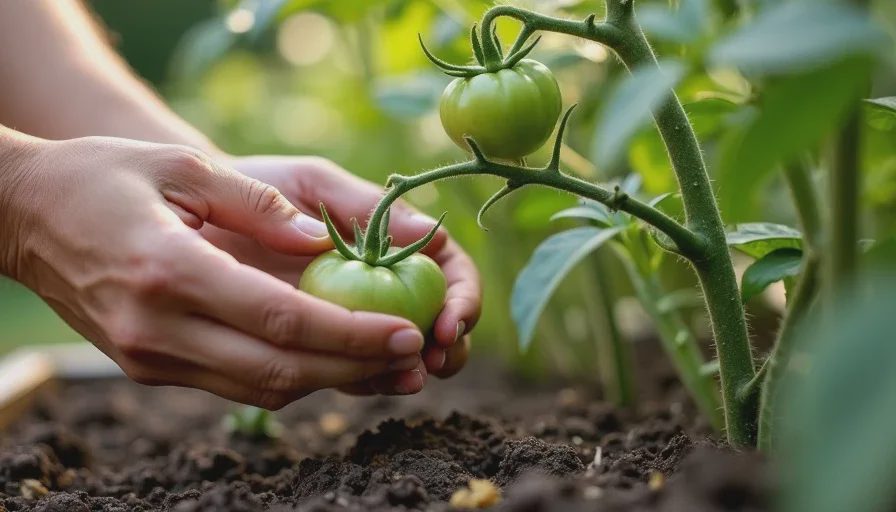
Dough behaves the same way. A recipe that says “bulk for four hours at room temperature” assumes a temperature and a starter strength you may not have. When the kitchen is cooler, the dough simply moves more slowly. When the starter is less active, the same clock produces less rise. Pushing it into the oven on schedule because the recipe said so has given me more dense loaves than any other single habit.
The garden cured me of that insistence. I stopped asking “Is it time yet?” and started asking “What is it actually doing?” The same question now sits over every bowl of dough.
Observation beats the schedule
In the garden I learned to look for specific signals: the way a tomato leaf loses its slight purple tint when the nights warm, the moment the garlic scapes curl and the bulbs below are ready to think about harvesting, the difference between a raspberry that is merely red and one that releases from the cane with almost no pull. Those signals are more reliable than the calendar.
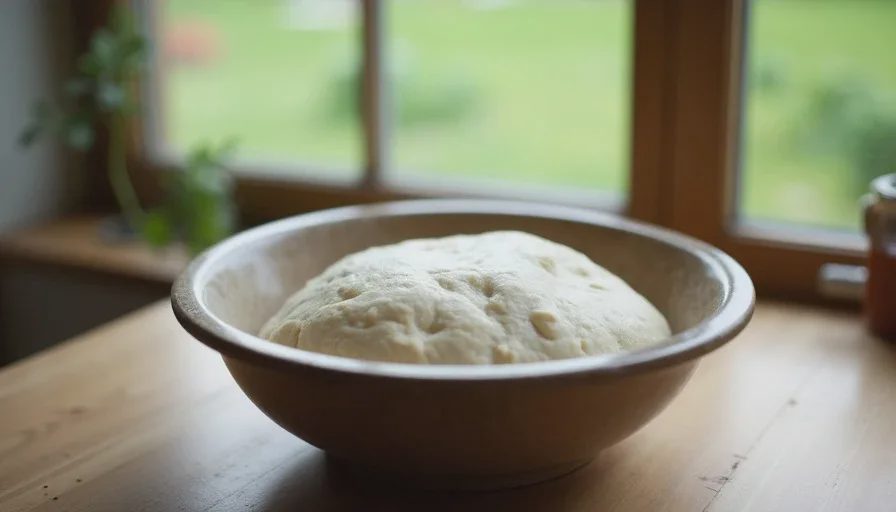
Dough gives its own signals. During bulk it becomes lighter, more jiggly, and roughly 50–75 % larger when it is ready for shaping. The surface shows small bubbles. A wet finger leaves a dent that slowly fills back. During final proof the dough feels airy but still has enough strength to hold the score. The poke test becomes readable once you have seen enough doughs pass through the stages.
I used to set a timer and walk away. Now I set a rough window and then check the actual dough. The garden made that change feel natural instead of fussy. You would not harvest a peach solely because the app said it was day 90. You would not bake a loaf solely because the clock said four hours. Both decisions improve when you look.
Uneven results are normal
Some years the thyme thrives and the basil stays small. Some beds produce more than we can eat. Some produce almost nothing. The garden is still worth having. I no longer treat a weak season as a personal failure. I treat it as information about water, light, soil, and weather that year.
Loaves are the same. Some bake with perfect ears and open crumb. Some come out flatter or tighter or more sour than I wanted. When I stopped needing every loaf to justify the effort, the process became lighter. The garden had already shown me that a living system produces a range of outcomes. Expecting only the top of the range is a good way to stay disappointed.
This does not mean I ignore problems. A plant that yellows gets investigated. A dough that never rises gets diagnosed. But the baseline expectation shifted from “perfect” to “responsive.” That shift reduced the number of loaves I threw away and the number of evenings I spent annoyed at the counter.
Temperature and water are shared languages
In the garden, cold nights slow everything. Hot, dry winds pull moisture out of leaves faster than the roots can replace it. I water more deeply and less often. I accept that growth pauses when the conditions pause.
In the kitchen the same principles apply. Cold dough ferments slowly. Warm dough moves fast and can over-proof. Dry air (common here) can tighten the surface of a proofing loaf. I adjust water temperature at mixing, choose cooler or warmer spots for bulk, and use the refrigerator when I need to slow the process. The garden made these adjustments feel like ordinary care rather than complicated technique.
Rosemary and thyme from the backyard still go into certain recipes. They taste like the place they grew—sometimes more resinous after a dry stretch, sometimes milder after steady water. I notice the difference and cook with it instead of against it. The same attention applied to starter and dough improves the bread.
What I carry back and forth
The garden taught me to plan in windows rather than fixed hours. It taught me that waiting is sometimes the most productive action. It taught me that a living thing shows you what it needs if you check on it without an agenda. Those habits transferred cleanly to proofing.
The kitchen taught me something in return. Precise notes help. When a dough behaves unexpectedly, writing down the temperature, the starter condition, and the timing makes the next attempt better. I started keeping simpler garden notes the same way: when the first raspberries actually ripened, how the thyme responded to a particular heat wave. The data does not control the living system. It just makes the next season or the next bulk a little more informed.
I still lose plants. I still bake loaves that are only fine. Both places remain worth the time. The garden is where I practice the longer form of the same patience the dough requires in a few hours. Proofing is where I practice the shorter, more detailed version of the attention the garden needs across months.
Neither one thrives on force. Both respond to steady observation and the willingness to adjust when the living thing in front of you is not following the plan. That is the entire lesson. I relearn it every spring in the garden and every time I mix a new dough. The plants and the yeast keep teaching the same quiet thing: you can guide the process, but you cannot rush the part that has to happen on its own.


No comments yet.