Beginner sourdough can feel like a tiny science project with flour on the floor and a starter that refuses to behave. I know the feeling. My first loaf spread into a pale, chewy pancake, and I still ate half of it standing at the counter. This guide is for making a good first loaf without a shopping spree, an Instagram-perfect kitchen, or the promise of guaranteed success. You need flour, water, salt, an active starter, and enough patience to notice what the dough is telling you.
Start with a starter that is actually ready
For beginner sourdough, starter activity matters more than the age written on the jar. Feed 25 grams of starter with 50 grams water and 50 grams bread flour. Stir, mark the starting level with a rubber band, and leave it somewhere around 72 to 78 degrees Fahrenheit. It is ready when it has doubled or nearly doubled in four to eight hours, looks bubbly through the sides, and smells pleasantly tangy rather than sharply chemical.
If it rises and then collapses before you mix, feed it again and wait for the next peak. A cold kitchen can stretch the timing to 10 or 12 hours; a warm spot can shorten it considerably. Do not panic over a gray layer of liquid on top. That is usually hooch, a sign the starter is hungry. Pour it off or stir it in, then give the culture regular feedings. Pink, orange, or fuzzy growth is a different matter: discard the starter and clean the jar.
For one loaf, I use 100 grams active starter, 350 grams water, 500 grams bread flour, and 10 grams fine salt. This creates a dough around 70 percent hydration, wet enough for a tender crumb but manageable for a first attempt. A kitchen scale is far more useful than a stand mixer here. Measuring cups can vary by several grams, and sourdough notices more than people expect.

Mix, rest, and build strength
Combine 100 grams starter and 350 grams water in a large bowl. Add 500 grams flour and mix until no dry patches remain. Cover and rest for 30 minutes. This short rest lets the flour hydrate before salt enters the picture. Add 10 grams salt with a teaspoon of water, then squeeze and fold the dough until it feels evenly mixed.
The next two hours are your bulk fermentation. Every 30 minutes, perform a set of coil folds or stretch-and-folds. Grab one side of the dough, pull it upward without tearing, and fold it across the center. Rotate the bowl and repeat three more times. After three or four rounds, the dough should hold itself in a soft mound instead of flowing immediately flat.
The clock is only part of the answer. At 75 degrees Fahrenheit, bulk fermentation might take four to six hours from mixing. Look for a dough that has grown by roughly 50 percent, shows bubbles at the edges, and jiggles when you gently move the bowl. If it has doubled and smells strongly sour, you probably went too far. Overproofed dough often becomes slack and sticky, then spreads when turned out.
For beginner sourdough, the most common failure is shaping dough before bulk fermentation has done its work. Underproofed dough feels tight, tears during shaping, and produces a dense middle. Give it another 30 to 60 minutes and reassess. The dough will forgive you. So will I.
Shape without wrestling the dough
Lightly flour the counter and ease the dough out. Do not drown it in flour; excess flour prevents the seams from sticking. Fold the left and right sides toward the center, then bring the bottom upward. Turn the dough seam-side down and use your hands or a bench scraper to pull it toward you in short movements. The surface should become smoother and slightly taut.
Place the shaped loaf seam-side up in a floured bowl lined with a clean cotton towel. Rice flour works especially well because it stays dry, but regular flour can work if the towel is generously dusted. Cover the bowl and refrigerate for eight to 16 hours. Cold dough is easier to score and gives the loaf more flavor.
If the dough puddles immediately, the likely problem is weak gluten or excessive fermentation. Chill it for 20 minutes and reshape gently. If it feels like a rubber ball that snaps back, it may need more rest before shaping. Do not keep forcing it. Five quiet minutes can do more than another round of aggressive folding.

Bake your beginner sourdough loaf
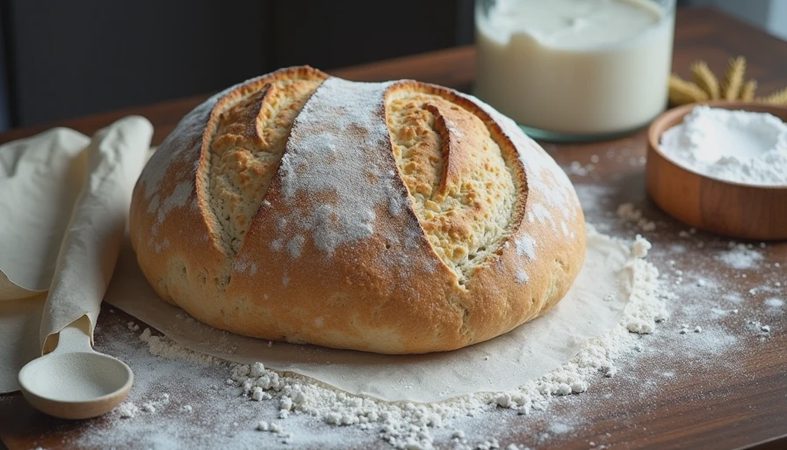
Heat a Dutch oven and your oven to 475 degrees Fahrenheit for at least 30 minutes. You do not need the most expensive enamel pot; a heavy, oven-safe pot with a lid works. Turn the cold loaf onto parchment, score one long slash about half an inch deep, and lower it into the hot pot. Bake covered for 20 minutes, then remove the lid and reduce the temperature to 450 degrees. Continue for 20 to 25 minutes, until the crust is a deep brown rather than blond.
The lid traps steam, which helps the loaf expand before the crust sets. If the bread barely rises, the starter may have been weak, the dough may have overproofed, or the oven may not have been fully heated. If the crust burns while the center stays gummy, lower the uncovered temperature by 25 degrees next time and verify the loaf is baked through. An instant-read thermometer should show about 205 to 210 degrees in the center.
Let the loaf cool for at least one hour before slicing. I know the smell is rude about this rule, but cutting too early compresses the crumb and makes it seem underbaked. If you do slice early, the bread will still make excellent toast.
A realistic beginner sourdough schedule
A simple schedule keeps this process from taking over your day. At 8 a.m., feed the starter. Around noon, mix the dough. Bulk ferment through the afternoon, folding during the first two hours. Shape around 5 p.m., refrigerate after 5:30, and bake the next morning. If your starter peaks later, shift the entire schedule instead of forcing it to match a recipe written for someone else's kitchen.
For a same-day beginner sourdough loaf, feed the starter early, use slightly warm water around 80 degrees, and plan for six to eight hours from mixing to baking. A warmer dough ferments faster, but it also becomes easier to overproof. Write down the room temperature, feeding time, dough weight, and result. My old data-analyst brain loves this part because the notes turn mysterious failures into patterns.
Fix the loaf you actually baked
A dense loaf is not automatically trash. Slice it thin and toast it. If the crumb is gummy, return slices to a 350-degree oven for several minutes. A flat loaf can become croutons, breadcrumbs, or grilled cheese. The next time, strengthen the dough with consistent folds and stop bulk fermentation when it has risen by half rather than waiting for a dramatic double.
If the crust is pale, bake longer uncovered. If the loaf tears beside the score, make the slash deeper or check whether it needed more proofing. If it is sour enough to make your eyebrows rise, shorten the cold proof or feed the starter more frequently before baking. Beginner sourdough is not a performance review; it is a repeatable experiment with lunch at the end.
You can make a delicious loaf with ordinary tools and a slightly crooked score. Put on the apron and go ahead and do it. It doesn't matter if it's perfect or not, just make it delicious.


No comments yet.