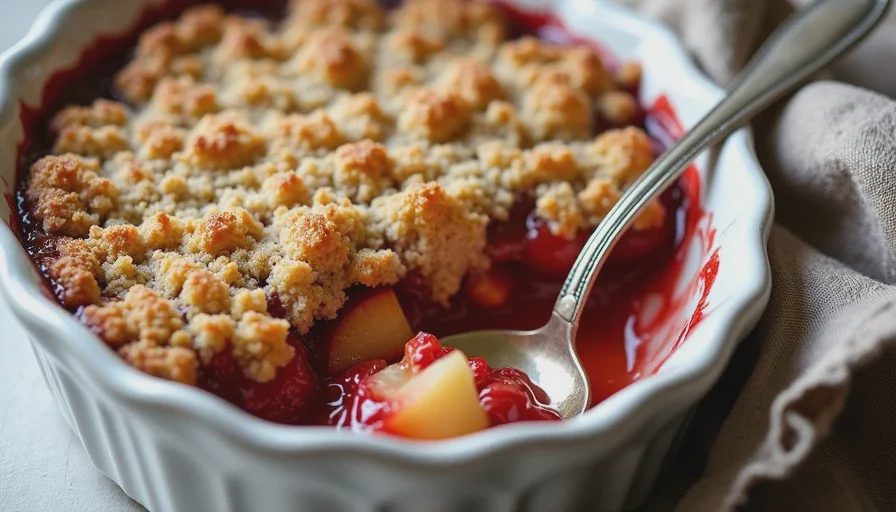
The garden behind our house is small and a little chaotic. Some years the raspberries take over. Some years the peaches on the single tree are excellent and some years they are hard and few. I stopped trying to force a specific dessert out of whatever is ripe. Instead I keep one crumble formula and change only the fruit and the sugar. It is the most useful sweet thing I know how to make.
This is not a crisp with oats and a dozen mix-ins. It is a simple butter-flour-sugar topping over seasoned fruit. The topping stays crisp on top and a little soft where it meets the juice. The fruit bubbles up around the edges. It tastes good warm and it tastes good cold the next day for breakfast with yogurt. Lily will eat the topping with her fingers and leave most of the fruit. That still counts as success.
The topping that does not change
Crumble topping (enough for an 8-inch or 9-inch square or similar volume)
120 g all-purpose flour
80 g granulated sugar (or 60 g sugar + 20 g brown sugar for more caramel notes)
¼ tsp fine salt (1 g)
90 g cold unsalted butter, cubed
Optional: 30 g chopped nuts or a small handful of oats if you want texture variation
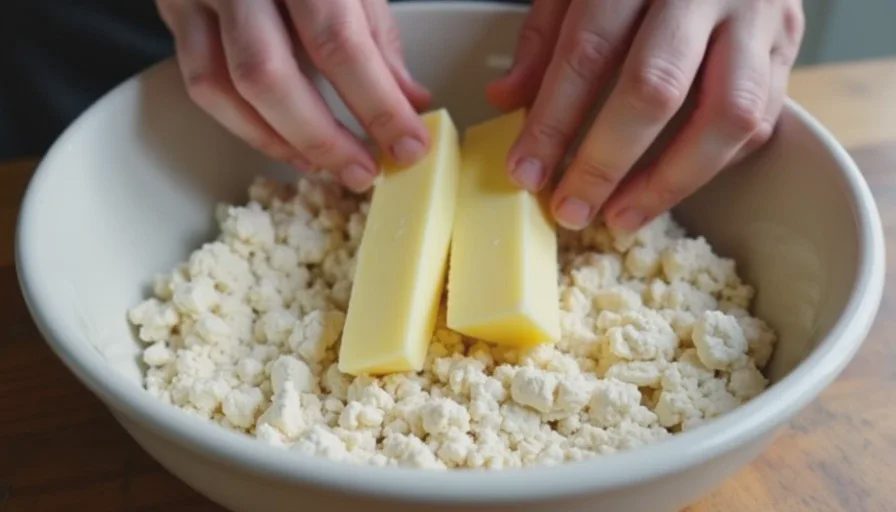
Whisk the flour, sugar, and salt. Add the cold butter and rub it in with your fingers or a pastry cutter until the mixture looks like rough crumbs with some pea-sized pieces left. Those pieces create the uneven, crisp surface. Do not work it into a uniform dough. If you add nuts or oats, toss them in at the end. Keep the topping in the refrigerator while you prepare the fruit so the butter stays cold.
This amount covers a standard baking dish of fruit without smothering it. If you use a deeper dish or more fruit, make a half batch extra.
The fruit layer that does change
The only real decisions are how much sugar and starch the fruit needs and whether it should be cut or left whole.
General starting point for 700–800 g prepared fruit
40–70 g sugar, depending on the fruit’s natural sweetness and your preference
1–2 Tbsp (8–16 g) cornstarch or all-purpose flour for thickening
1 Tbsp lemon juice
Pinch of salt
Optional: ½ tsp cinnamon, a few scrapes of lemon zest, or a tiny bit of minced fresh thyme or rosemary from the garden
Taste the fruit first. Tart berries and early peaches need more sugar. Soft, ripe berries and sweet apples need less. Juicy fruit (most berries, ripe peaches, plums) needs the full 2 Tbsp starch. Firmer or drier fruit (apples, firm pears) can take the lower amount or sometimes none.
Berries (raspberries, blackberries, blueberries, strawberries)
Leave small berries whole. Hull and halve strawberries. Toss with 50–70 g sugar, 2 Tbsp cornstarch, lemon juice, and a pinch of salt. They release a lot of liquid, so the starch matters. I add a little lemon zest when the berries are very sweet.
Stone fruit (peaches, plums, apricots, nectarines)
Peel if the skins are tough. Cut into wedges or chunks. Toss with 40–60 g sugar, 1–2 Tbsp starch depending on juiciness, lemon juice, and a pinch of salt. A few leaves of minced thyme from the garden are good with peaches. Rosemary works with plums if you use a very light hand.
Apples or pears
Peel, core, and slice about ½ inch thick. Toss with 40–50 g sugar, 1 Tbsp starch or flour, lemon juice, salt, and cinnamon if you like. Firm apples hold their shape. Softer ones collapse into something closer to a compote under the topping, which is also fine.
In Denver the growing season is intense and short. Fruit often comes off the plant a little firmer than the same varieties at lower elevation. I sometimes let cut stone fruit or apples sit with the sugar for 15–20 minutes before adding the starch so they begin to release juice. It helps the filling come together in the oven.
Putting it together and baking
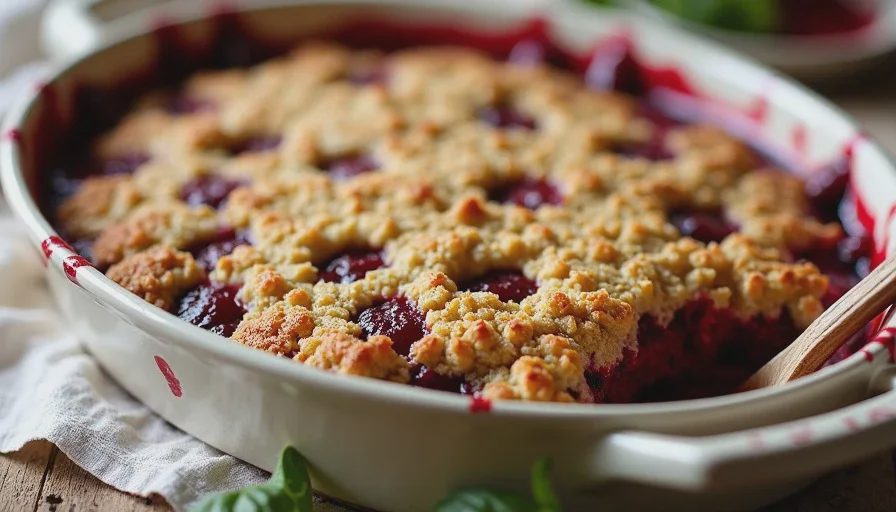
Heat the oven to 375°F (190°C). Butter a baking dish. Tip in the seasoned fruit and spread it evenly. Scatter the cold topping over the fruit. Do not press it down. Leave some gaps so steam can escape and the fruit can bubble through.
Bake 35–45 minutes until the topping is a deep golden brown in places and the fruit is bubbling thickly at the edges. If the top is browning too fast before the fruit is soft, tent it loosely with foil for the last 10 minutes. Let the crumble sit at least 15–20 minutes before serving. The filling thickens as it cools.
I bake this in a regular metal or ceramic dish. No special equipment. If the bottom of the fruit seems watery after baking, the fruit was very juicy and could have used a little more starch or a couple of extra minutes in the oven. It will still taste good. Spoon it into bowls and ignore the extra juice, or serve it over ice cream or yogurt where the liquid becomes a sauce.
What I have learned from making this on repeat
The topping is more important than most people think. Cold butter and a light hand keep it crisp. If you overmix it into a paste, it bakes up denser and less pleasant. I make the topping first and chill it even if the fruit is already ready.
Sugar is not fixed. I write the range because fruit changes week to week. Taste and adjust. The same is true for starch. Too little and you have soup. Too much and the filling turns gluey. Start in the middle of the range and note what your particular fruit did.
Garden herbs are optional but useful. A small amount of thyme or rosemary from the backyard makes the crumble taste like it belongs to the place it came from. Use almost less than you think you need. The goal is a background note, not a savory dish.
This recipe has absorbed every fruit the garden has produced in the last few years. Some versions were better than others. The raspberry one with a little lemon zest is a favorite. The early peach one with thyme is close. The apple one in fall is the most comforting. None of them required a different topping. That is the point.
Make the topping. Taste the fruit. Adjust the sugar and starch. Bake until it bubbles and the top is properly brown. Serve it in bowls with whatever is around—yogurt, ice cream, or nothing. The leftovers keep in the refrigerator for a couple of days and reheat well enough that I sometimes eat them for breakfast without apology.
The garden does not produce perfect fruit every week. The crumble does not need it to. It only needs enough fruit to fill a dish and a topping that stays uneven on purpose.

No comments yet.