Choosing dessert for birthdays can turn into a tiny project-management crisis. Someone wants chocolate, someone hates frosting, the grocery store is out of strawberries, and suddenly you are searching for piping tips at 10 p.m. I have been there, usually with flour on my elbow and Lily asking whether the cake is ready yet. The good news is that a birthday dessert does not need fondant, three days of preparation, or a perfectly smooth finish. It needs good flavor, a sensible timeline, and enough candles.
Start with the kind of celebration
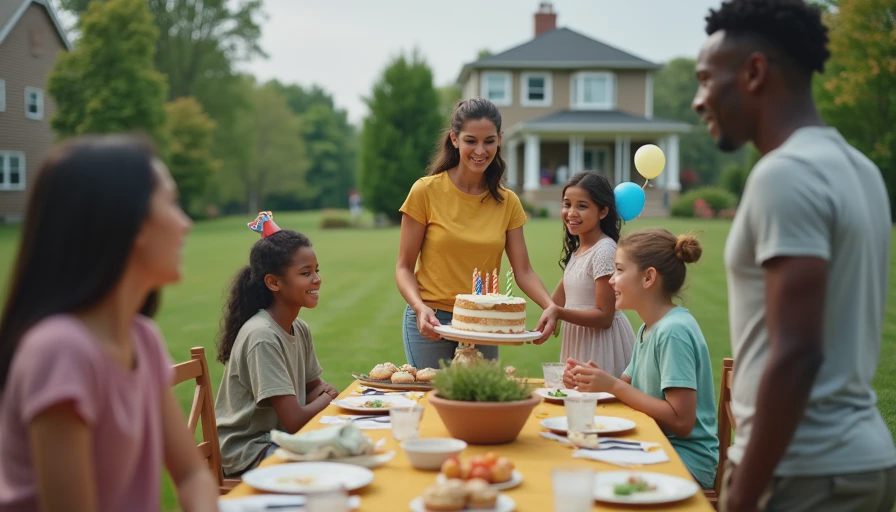
The best dessert for birthdays depends less on age and more on how the party will actually work. For a dinner with adults, a two-layer chocolate cake with salted buttercream feels generous and slices neatly. For a backyard gathering, brownies or a sheet cake are easier because guests can serve themselves without balancing a plate and a fork. For a child’s party, cupcakes prevent the dramatic argument over who received the biggest piece.
I also ask one practical question: will the dessert sit outside the refrigerator? Whipped cream, mousse, and cream cheese frosting need more careful handling on a warm afternoon. A butter cake with ganache, simple vanilla icing, or a fruit crumble is more forgiving. That is not a boring choice. It is choosing a dessert that will still look and taste good after thirty minutes of greetings, presents, and somebody dropping a balloon on the table.
For a small gathering of four to six people, bake an eight-inch single-layer cake or a six-inch two-layer cake. For eight to twelve guests, a nine-inch layer cake or a 9-by-13-inch sheet cake gives you comfortable portions. If you need dessert for birthdays and do not know the guest count, brownies are the safest mathematical answer: cut them small, and nobody complains about an extra square.
A reliable chocolate cake plan
My favorite dessert for birthdays is a straightforward chocolate cake because it stays moist, works with grocery-store ingredients, and does not punish you for a slightly uneven oven. For two 8-inch layers, use 240 grams all-purpose flour, 300 grams granulated sugar, 65 grams unsweetened cocoa powder, 6 grams baking soda, 4 grams baking powder, and 5 grams kosher salt. Whisk in two large eggs, 240 grams buttermilk, 120 grams neutral oil, 8 grams vanilla extract, and 240 grams hot coffee or water.
Divide the batter between greased and parchment-lined pans. Bake at 350°F for 28 to 34 minutes, rotating once after 20 minutes. The centers should spring back lightly, and a toothpick should show a few moist crumbs rather than wet batter. Cool the layers in their pans for 15 minutes, then turn them onto a rack. Do not frost warm cake unless you want a glossy puddle running down the sides.
Here is the failure mode I see most often: a sunken middle. Usually, the cake came out before the center had set, or the oven door was opened too early. The fix is not more baking powder. Bake until the center reaches roughly 205°F to 210°F, or until the physical signs are right. If the cake still sinks, trim the middle flat, fill the dip with frosting, and call it a design decision. I have served worse-looking cakes that disappeared faster.
Frosting without a pastry-school audition
A birthday dessert does not need elaborate piping to look intentional. For an easy American buttercream, beat 225 grams softened unsalted butter for three minutes. Add 360 grams powdered sugar in three additions, mixing slowly at first, then add 30 grams heavy cream, 8 grams vanilla, and 2 grams salt. Beat for another two minutes. This makes enough for a modest layer cake with a thin coat and simple swirls.
If the frosting looks curdled, keep beating for another two minutes; the temperature and texture often come back together. If it looks soupy, chill the bowl for 15 minutes and beat again. If the cake has many crumbs, spread a very thin crumb coat, refrigerate it for 20 minutes, then add the final layer. The coat does not need to be perfectly smooth. A few visible ridges make the cake look homemade in the best possible way.
Chocolate ganache is another excellent option. Pour 170 grams hot heavy cream over 225 grams chopped semisweet chocolate, wait five minutes, then stir until smooth. Let it cool until thick enough to spread. Use it for dessert for birthdays when you want a polished finish without learning how to pipe roses. Add sprinkles while the ganache is still soft, because sprinkles refuse to stick once the surface sets.
Make-ahead timing that protects your evening
The smartest dessert for birthdays is the one that does not require every step on party day. Bake the cake layers up to two days ahead. Once cool, wrap each layer tightly in plastic wrap and keep it at room temperature for one day or refrigerate for two. Cold layers are also easier to stack because they shed fewer crumbs. You can make buttercream three days ahead and refrigerate it in an airtight container. Bring it to room temperature, then beat it again before using.
On the morning of the celebration, assemble and frost the cake. If you are adding fresh berries, place them on top shortly before serving so their juice does not stain the frosting. Cut fruit with a clean knife and pat it dry first. For brownies, bake them the night before and leave them in the pan until completely cool. Chilled brownies cut most cleanly, but let them sit for 20 minutes before serving so the chocolate flavor wakes up.
A useful schedule looks like this: bake on Thursday for a Saturday party, prepare frosting on Friday, assemble Saturday morning, and decorate after lunch. This spreads the work across short sessions instead of turning the final hour into a flour-covered emergency. Mark has learned that “I just need to decorate” usually means I need the whole kitchen table, two clean spatulas, and silence for ten minutes.
Decorating ideas that survive real kitchens
For dessert for birthdays, choose one decoration and repeat it. A border of chocolate chips, a pile of raspberries, colorful sprinkles, or sliced strawberries can look more confident than six unrelated ideas. Press chopped toasted nuts around the bottom edge to hide an uneven frosting line. Dust cocoa powder over a paper number stencil for a quick finish. Write a name with melted chocolate on parchment, chill it until firm, and transfer it carefully to the cake.
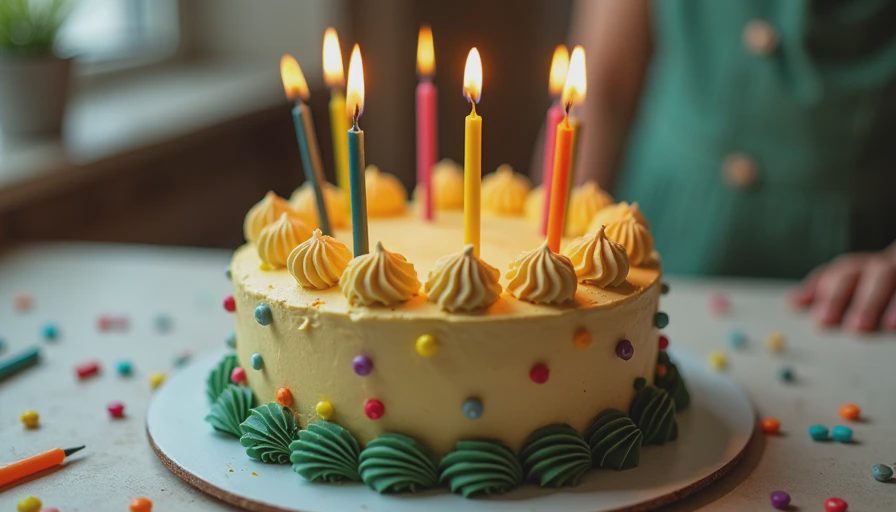
Candles do more visual work than people expect. Put them in a neat cluster rather than scattering them across the entire surface. If the cake is for a young child, keep small decorations away from the edge where little fingers will immediately investigate. A sheet cake decorated with frosting swoops and one bright color is festive without requiring a turntable, airbrush, or equipment that will live in a cabinet forever.
What to do when the cake goes wrong
If a layer cracks, patch it with frosting and chill it before stacking. If it is dry, brush each layer with 30 to 45 grams of simple syrup made from equal parts water and sugar; use vanilla, coffee, or orange zest for flavor. If frosting pulls crumbs from the cake, stop spreading, chill the cake, and apply a thinner coat with a clean spatula. If the center is raw but the edges are done, return the cake to a 325°F oven for 8 to 12 minutes and cover the top loosely with foil.
If the result is truly burned, gummy, or smells like a pan left in the oven overnight, throw it in the trash. I mean it. Make brownies, buy a plain pound cake, or serve ice cream with hot fudge. Dessert for birthdays is supposed to mark a happy day, not prove that you can rescue every failed bake. It does not matter if it is perfect or not, just make it delicious. Put on the apron and go ahead and do it. The dough will forgive you. So will I.

No comments yet.