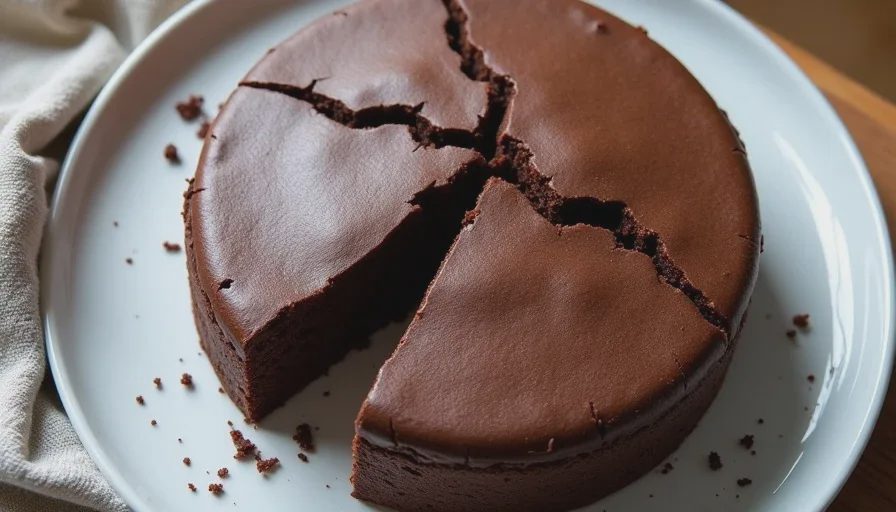
I used to poke the cracks closed with a wet knife and dust them with powdered sugar until the surface looked acceptable for a photo. Then I stopped. The cake still tasted the same. The people who ate it never mentioned the crack. Lily, who is three and a half, has never once cared whether the top is smooth. So the crack stays.
This is the chocolate cake I make when I want something reliable that does not require a stand mixer, a water bath, or perfect timing. It is one bowl. It uses oil instead of butter so it stays soft even after a day or two. It almost always develops a fault line across the top while it bakes. That line is not a failure. It is what happens when a simple batter rises and sets unevenly in a home oven. I have made this cake dozens of times. The crack is part of the recipe now.
Why this cake cracks
Most cakes crack when the outside sets before the inside has finished expanding, or when the oven runs a little hot on one side. My oven does both. The batter is relatively thin and high in sugar and fat, so it continues to move after the top has begun to firm. The result is a clean, deep crack that looks dramatic and does nothing to the texture underneath.
I used to lower the temperature or tent the cake with foil to prevent it. The crumb stayed moist either way. The only real change was that the top looked more “finished.” Once I decided the finished look was less important than the actual eating experience, I stopped fighting the crack. Now I bake it at the temperature that gives the best crumb and accept the surface that comes with it.
At Denver elevation the batter can rise a little faster and the crack often appears earlier. I do not change the recipe for altitude beyond making sure the baking powder is fresh. The cake is forgiving enough that the difference stays small.
The recipe (one 8-inch or 9-inch round)
Dry ingredients
180 g all-purpose flour
40 g unsweetened cocoa powder (natural or Dutch-process both work)
200 g granulated sugar
1 tsp baking powder (4 g)
½ tsp baking soda (3 g)
½ tsp fine sea salt (3 g)
Wet ingredients
2 large eggs (about 100 g without shells)
120 g neutral oil (grapeseed, canola, or light olive)
180 g buttermilk (or 170 g milk + 10 g lemon juice or vinegar, left to sit 5 minutes)
2 tsp vanilla extract (10 g)
120 g hot coffee or hot water
Heat the oven to 350°F (175°C). Grease an 8-inch or 9-inch round pan and line the bottom with parchment. An 8-inch pan gives a taller cake and a more pronounced crack; a 9-inch pan spreads it a little.
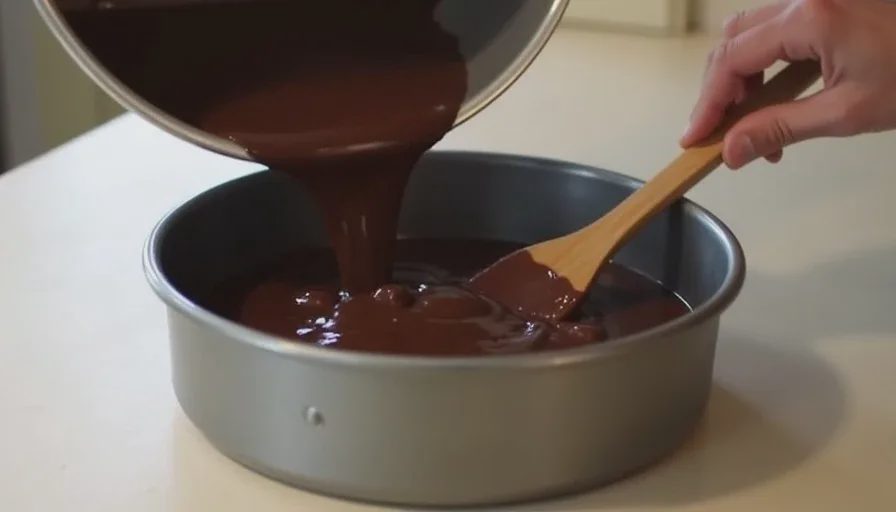
In a large bowl whisk the dry ingredients until no cocoa lumps remain. In a separate jug or small bowl combine the eggs, oil, buttermilk, and vanilla. Pour the wet into the dry and stir until just combined. The batter will be thick. Add the hot coffee or water and stir again until smooth. It will loosen considerably and look glossy.
Pour into the prepared pan. Bake 32–40 minutes, depending on pan size and oven. The cake is done when a toothpick in the center comes out with a few moist crumbs, not wet batter. The top will have cracked. Let it cool in the pan 15 minutes, then turn out onto a rack.
I do not frost this cake when I make it for us. A light dusting of cocoa or powdered sugar is enough. If you want frosting, wait until the cake is completely cool. A simple ganache or whipped cream works. The crack will still show. That is fine.
Texture notes and small adjustments
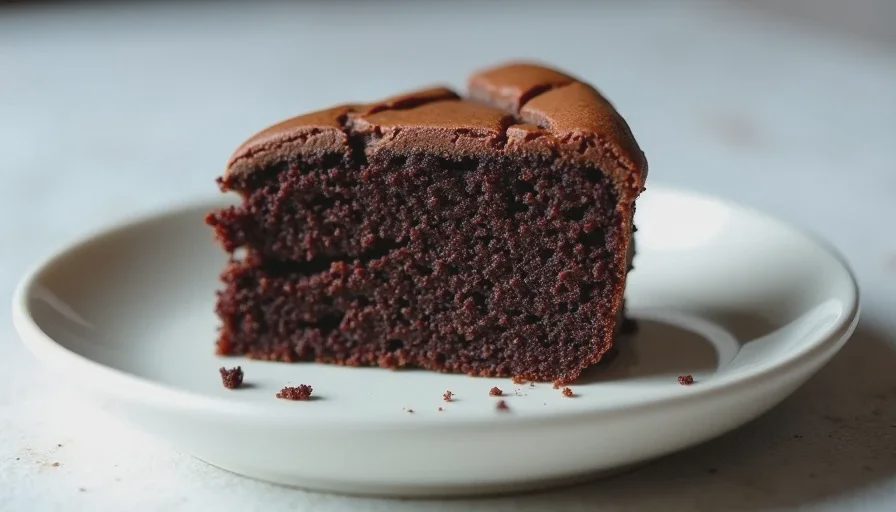
The crumb is soft, even, and slightly dense in the best way—more like a snack cake than a fluffy layer cake. Oil keeps it that way for a couple of days on the counter under a cover. Butter versions dry out faster in my kitchen.
If you only have Dutch-process cocoa, the baking soda still works; the flavor is a little darker and less acidic. If you only have natural cocoa, the same. I have used both without changing anything else.
Buttermilk gives a slight tenderness. The milk-plus-acid substitute is close enough that I use it without thinking when the carton is empty. Hot coffee deepens the chocolate flavor without making the cake taste like coffee. Hot water works if you prefer a cleaner profile.
Overbaking is the one thing that actually hurts this cake. Start checking at 32 minutes for a 9-inch pan. The crack can look dramatic while the center is still perfect. Pull it when the crumbs on the toothpick are moist but not shiny.
How I serve it and what I have learned
We eat it plain in the afternoon with coffee. Sometimes I warm a slice and add a spoonful of yogurt or a few berries from the garden when they exist. Lily prefers it for breakfast the next day, crack and all. Mark has never once asked me to make the top smoother.
I have tried versions with melted chocolate, with brown sugar, with extra egg yolks. All of them worked. None of them were enough of an improvement to replace the basic formula. The simple one is the one I reach for when I want chocolate cake without a project.
The crack used to feel like evidence that I had done something wrong. Now it feels like evidence that the cake was made in a real oven by a person who was also doing other things that day. I take the photo with the crack visible. I write the recipe with the crack included. People still make it. Some of them even write to say their cake cracked too and they left it that way.
That is the entire point. The cake is good. The surface is secondary. Put it on a plate. Cut a slice. The dough (or in this case the batter) will forgive the uneven rise. So will anyone who actually eats it.


No comments yet.