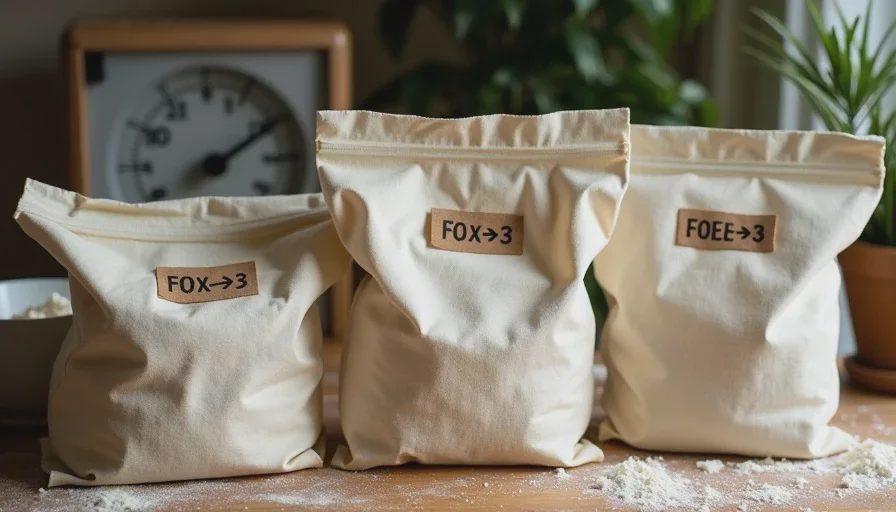
I used to buy the expensive flour because the bag looked serious and the price suggested it must be better. Then I started weighing results instead of assumptions. Same formula, same starter, same oven, different bags of flour. The differences were real, but they were not always in the direction the price tag promised.
Flour is not a single ingredient. Protein content, protein quality, ash level, particle size, how the wheat was grown and milled, and how long the flour has sat on a shelf all change how the dough feels and how the bread tastes. Some of those variables scale with price. Some do not. This is what I found when I stopped treating flour as a background constant and started treating it as a measured variable.
What the protein number actually tells you
Most bags list protein percentage. Bread flours usually sit between 12 % and 14 %. All-purpose is often 10–12 %. The number is a useful starting point because higher protein generally means more potential gluten strength. In side-by-side mixes, the 13.5 % flour produced a dough that felt stronger and held shape more easily than the 11.5 % flour at the same hydration.
But the number is incomplete. Two flours with identical protein percentages can behave differently because the quality of the gluten-forming proteins varies. One may absorb more water and develop a silky, extensible dough. Another may feel bucky or tear more easily. Protein quantity is easy to print on a bag. Protein quality is harder to measure at home and is one reason price and performance do not always move together.
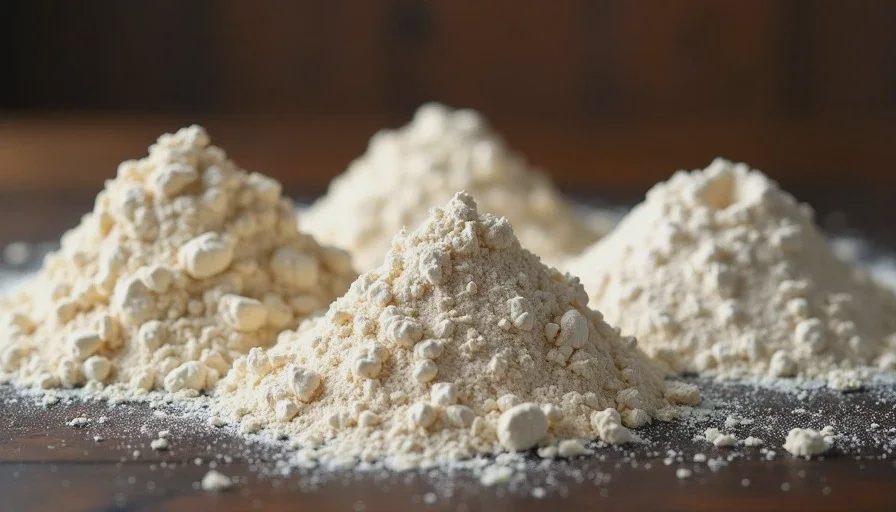
In my tests, a mid-priced national bread flour at 12.7 % protein outperformed a more expensive bag at 13.2 % in terms of consistency across several weeks. The cheaper flour simply behaved the same way every time I opened a new bag. The expensive one varied more from bag to bag. Consistency is worth more than a half-point of protein when you are trying to repeat a result.
Absorption, freshness, and the quiet variables
Higher-extraction and freshly milled flours often absorb more water. A dough that feels perfect at 72 % hydration with supermarket bread flour can feel stiff with a fresh, high-extraction flour. You add water until the feel matches what you want, and the final hydration ends up higher. That is not a flaw in the flour. It is a difference in milling and particle characteristics.
Freshness matters more than most marketing admits. Flour oxidizes and loses some of its extensibility over months. A specialty flour that sat in a warm warehouse or on a store shelf for a long time can bake like a duller version of itself. Supermarket flour moves faster and is often younger when you buy it. I have had excellent results from ordinary bags that were clearly fresh and mediocre results from premium bags that smelled flat or behaved sluggishly.
Ash content (a rough proxy for how much bran and mineral material remains) affects both color and flavor. Higher-ash flours taste more wheat-like and can make the dough feel slightly weaker because bran particles interfere with the gluten network. Whether that is desirable depends on the bread. For a clean sandwich loaf I prefer lower ash. For a rustic country loaf I often prefer the deeper flavor of a higher-extraction flour, even if it costs more.
What actually showed up in the baked loaves
I baked the same 70 % hydration sourdough formula with three flours: a standard supermarket bread flour, a widely available mid-tier “artisan” bread flour, and a higher-priced specialty flour milled from specific wheat varieties. The starter, salt, timing, and oven were identical.
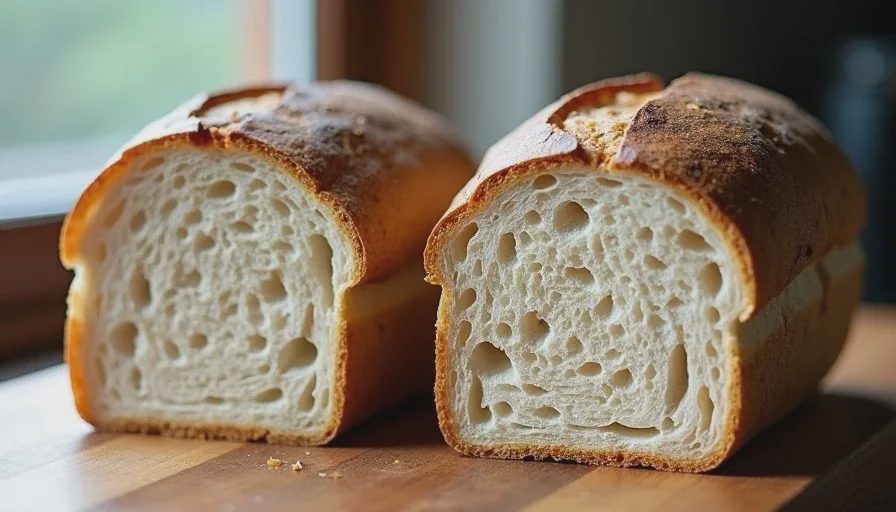
The supermarket flour produced a reliable, slightly tighter crumb and mild flavor. Oven spring was good. The mid-tier flour gave a more open crumb and noticeably better wheat taste. The specialty flour produced the most complex flavor and a very open crumb when everything went right, but it also produced the most variable results across different bags. One bag was excellent. The next felt weaker and needed hydration and fold adjustments.
In cookies and cakes the differences shrank. Once fat and sugar limit gluten development, the protein percentage and milling differences matter less. I could not reliably tell the expensive flour from the supermarket flour in a blind tasting of the chocolate cake or the gram-weight cookies. For tender baked goods the cheaper flour was sufficient.
At Denver elevation the drier air and lower atmospheric pressure make small differences in absorption more noticeable. A flour that already wants more water shows that preference earlier here. I learned to adjust by feel rather than locking the hydration number to the bag’s reputation.
When the expensive flour is worth it
Buy the higher-priced flour when you are making bread where wheat flavor is the point and you have a source that is consistent. Freshly milled or carefully sourced specialty flour can deliver complexity that commodity flour does not. If you bake sourdough several times a week and care about the nuance, the upgrade can be justified.
Skip it when you are making everyday sandwich bread, enriched doughs, cakes, or cookies. The performance gap narrows and the price gap remains. A reliable mid-tier bread flour is the best value for most of the baking I do at home. I keep a bag of ordinary supermarket bread flour for testing new formulas because I want to know the recipe works with flour people actually have.
The bakery where I still work part-time uses a consistent commercial bread flour chosen for performance at volume, not for romantic origin stories. The loaves are excellent. That taught me more about priorities than any bag design.
The practical rule I use now
I read the protein percentage as a rough guide, then I watch how the dough feels and how the baked bread tastes. If a flour gives me strength, predictable absorption, and good flavor at a moderate price, I stay with it. If a more expensive flour clearly improves the bread I care most about and stays consistent across bags, I pay for it. If the only difference is the story on the package, I put the money back in the jar.
Expensive flour can matter. It does not matter automatically. The numbers on the bag are a starting point. The dough and the finished loaf are the only measurements that finally count. Run your own small tests with the formulas you bake most. The results will tell you more than the price tag ever will.


No comments yet.