Baking science sounds like a subject reserved for pastry chefs in spotless white kitchens. It is not. Baking science is simply the useful explanation behind the things happening in your mixing bowl: why dough becomes stretchy, why cookies spread, and why a cake sinks before dinner. Once you understand those changes, recipes stop feeling like a list of mysterious orders and start becoming something you can adjust.
I learned this the slow way, through collapsed sourdough, burnt edges, and a truly spectacular cake crater. Gérard, the grumpy French baker who supervised my apprenticeship, would look at a failed loaf and ask, “What did the dough tell you?” Usually, I had ignored it. The same principle works at home. Watch the dough, measure the ingredients, and use baking science to find the likely failure instead of blaming yourself.
Flour, Water, and Gluten
Flour provides starch and proteins. The two proteins that matter most for bread are glutenin and gliadin. When flour and water meet, those proteins begin forming gluten, the elastic network that holds fermentation gases. Kneading strengthens that network, but time also helps. This is why a shaggy dough can become smoother after a 30-minute rest without heroic kneading.
The protein percentage of flour changes the result. Bread flour often produces a chewier loaf because it generally has more protein than all-purpose flour. All-purpose flour is perfectly useful for sandwich bread, muffins, biscuits, and many cookies. Cake flour has less protein, so it encourages a softer, more delicate crumb.
Hydration matters just as much. A dough made with 350 grams of water and 500 grams of flour is at 70 percent hydration. That dough will feel wetter than one made with 300 grams of water and 500 grams of flour. Wetter dough can produce an open crumb, but it also demands confident handling. If your loaf spreads into a pancake, reduce the water by 20 to 30 grams next time rather than adding handfuls of flour during shaping.
Baking science also explains why salt is more than flavor. Salt tightens gluten, slows yeast activity, and helps bread taste balanced. Leave it out and the dough can ferment quickly while becoming slack and oddly bland.
Yeast, Fermentation, and Time
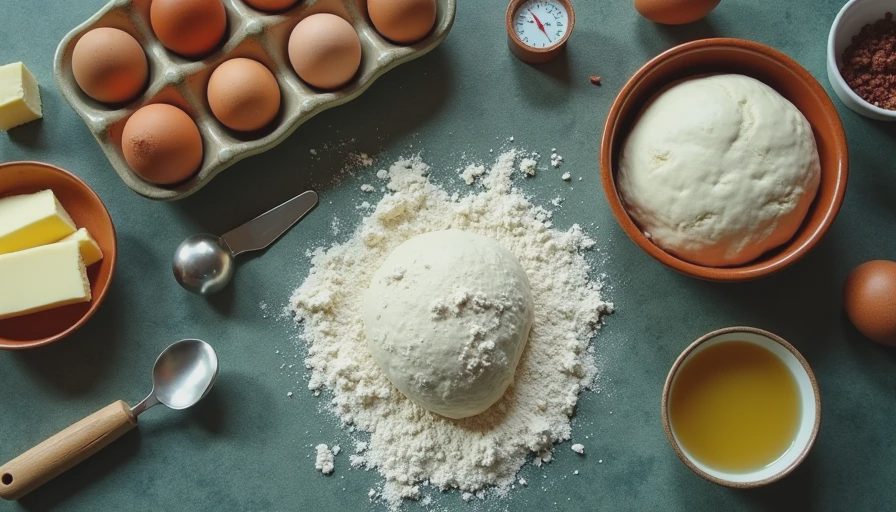
Yeast consumes sugars and releases carbon dioxide and alcohol. The carbon dioxide gets trapped in the gluten network, causing bread dough to rise. That is the visible part. Fermentation also creates flavor, which is why rushing a loaf often gives you something puffy but tasteless.
Temperature controls the speed. A dough fermenting at 78 degrees Fahrenheit will usually move faster than the same dough at 68 degrees. Your kitchen, flour temperature, water temperature, and even the bowl can shift the schedule. Recipe times are useful landmarks, not contracts. Look for volume, bubbles, elasticity, and aroma.
For sourdough, the starter’s strength matters more than the calendar. A starter that doubles in four hours behaves differently from one that needs ten hours. Feed it, mark its level with a rubber band, and record how long it takes to peak. This tiny data habit is baking science in practical clothing.
The most common fermentation failure is an under-proofed loaf. It feels dense, springs back quickly when pressed, and may split dramatically in the oven. An over-proofed loaf can feel fragile, deflate when scored, and bake up flat. If mine is under-proofed, I give it more time. If it is over-proofed and collapsing, I bake it anyway. It may not win a photo contest, but toast rarely asks for one.
Sugar, Fat, Eggs, and Structure
In cakes and cookies, baking science gets especially interesting because ingredients compete and cooperate. Sugar sweetens, but it also attracts water, delays gluten development, and helps baked goods brown. That is why reducing sugar by half can produce a dry, pale, tough cake rather than a healthier version of the original.
Butter contributes flavor, tenderness, and water. During baking, the water in butter turns to steam while the fat coats flour particles and limits gluten formation. Cold butter creates flaky layers in biscuits and pie dough. Soft butter creamed with sugar traps air, helping some cakes rise. Melted butter usually creates a denser, chewier texture.
Eggs provide water, fat, protein, emulsifiers, and structure. Egg whites can trap air, while yolks add richness and help fat and water stay combined. If a cake recipe says room-temperature eggs, there is a reason: they blend more smoothly into the butter mixture. A cold egg can make creamed butter look curdled. The batter is not necessarily ruined, but the final texture may be less even.
Baking science does not mean every ingredient must be handled nervously. It means you know what a substitution changes. Replacing one large egg with extra liquid is not equivalent because eggs also provide protein and structure. Adding two tablespoons of flour to a sticky cookie dough can absorb moisture, but it can also make the cookie cakey. Change one variable at a time when you can.
Heat, Steam, and Browning
The oven is not just a hot box. Heat moves into the batter or dough, water turns to steam, proteins set, starches gelatinize, and sugars brown. In bread, early steam keeps the crust flexible long enough for the loaf to expand. Without it, the crust can harden too soon and restrict oven spring.
An oven thermometer is more useful than trusting the dial, especially if your oven runs 25 degrees hot. If a loaf is dark outside but gummy inside, the problem may be excessive heat, a short bake, or a high-hydration dough that needs more time. Tent the top with foil after it has browned and keep baking until the center is properly set.
Browning comes from caramelization and the Maillard reaction. Both create color and flavor, but they are not identical. Milk, eggs, and certain sugars can encourage browning. A pale cookie may need more time, a warmer oven, or a different pan. A nearly black cookie with a raw center usually needs a lower temperature and longer bake.
Use the pan as part of your equipment choices. A dark metal pan absorbs heat efficiently and can brown edges quickly. A shiny aluminum pan reflects more heat and often produces gentler browning. Glass heats differently again, so a recipe written for metal may need a modest temperature adjustment and close observation.
A Simple Troubleshooting Method
When a bake fails, write down what happened before changing the recipe. Record the flour brand, grams of each ingredient, room temperature, dough temperature if you know it, proofing time, oven setting, and final appearance. Data will not make a bad loaf less disappointing, but it can stop you from repeating the same mystery.
If bread is dense, first ask whether fermentation was complete. If cookies spread, check butter temperature, flour measurement, and whether the dough was chilled. If muffins are tough, consider overmixing: once flour is hydrated, unnecessary stirring develops gluten. If a cake sinks, underbaking, too much leavening, opening the oven early, or an unstable structure are common suspects.
Baking science is most useful when it leads to one clear next experiment. Keep the recipe the same and proof the dough 30 minutes longer. Or use the same cookie dough on a light pan. Or weigh the flour instead of scooping it. Small controlled changes teach you more than throwing six adjustments into one desperate batch.
Make the Next Batch Better
You do not need a $300 mixer or a wall of specialized tools to bake well. A digital scale, instant-read thermometer, sturdy bowl, scraper, and reliable oven thermometer cover a great deal. Weighing flour is especially valuable because a packed cup can contain much more flour than a gently filled cup.
Read recipes all the way through before starting. Note whether butter must be cold or softened, whether the starter needs feeding, and whether the dough rests overnight. Set a timer, but also check visual clues. A loaf should look aerated and feel lighter; a cake should spring back gently; a cookie often finishes setting on the hot sheet after it leaves the oven.
The goal is not laboratory perfection. My ugliest loaves have made excellent grilled cheese, and Lily has never rejected a cracked brownie. Use baking science to understand the process, not to take the joy out of it. Make the measurement, notice the result, and adjust with purpose. The dough will forgive you. So will I.


No comments yet.