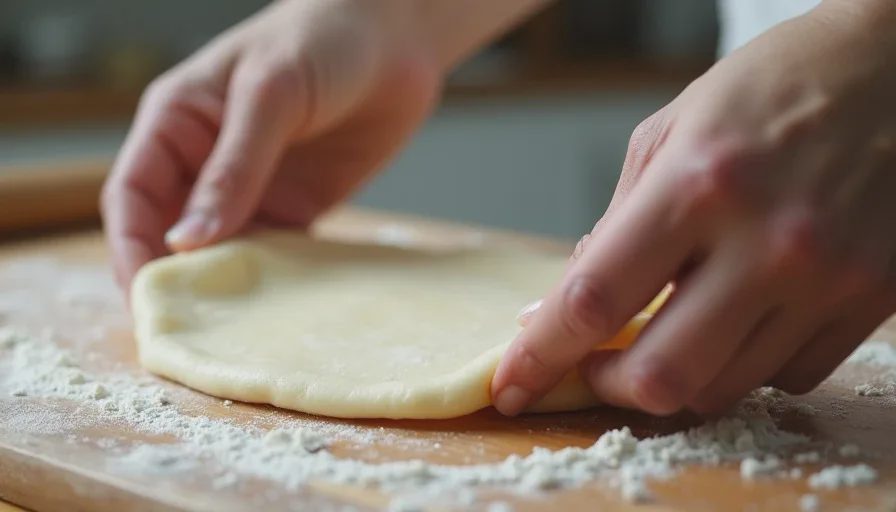
I spent years looking at numbers for a living. When I started baking seriously I wanted the same clarity about why dough behaves the way it does. Most explanations of gluten either stay too vague (“it gives structure”) or dive into chemistry that does not help when you are standing at the counter with a sticky mass that will not come together. This is the version I wish someone had given me earlier.
Gluten is not a separate ingredient you add. It is a network that forms from two proteins already present in wheat flour: gliadin and glutenin. When flour meets water, these proteins hydrate. When you mix, knead, or fold the dough, the proteins link up into a stretchy, elastic web. That web traps gas from yeast or chemical leaveners and gives the dough its ability to rise and hold shape. That is the entire core idea.
What the network actually does in the kitchen
Once the gluten network develops, dough can stretch without tearing and then spring back. In bread this is what lets the loaf expand in the oven and keep an open crumb instead of collapsing. In a cake or muffin you usually want much less of this network so the crumb stays tender. In pastry you often want just enough structure to hold a shape but not so much that the crust becomes tough.
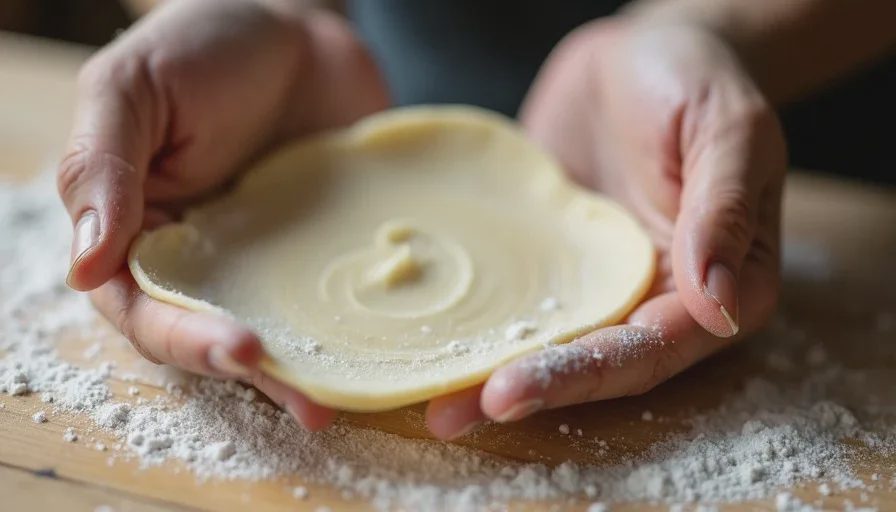
The strength of the network depends on three main things: the flour you start with, how much water is available, and how much mechanical work (mixing, kneading, folding) you give it. Time also matters. Even without heavy kneading, a rested dough continues to form bonds slowly. That is why a no-knead bread can still develop enough structure for a decent loaf.
Flour, water, and work — the practical levers
Flour type sets the ceiling. Bread flour has more of the two proteins (usually 12–14 % protein) and forms a stronger network. All-purpose sits in the middle (10–12 %). Cake flour is lower and is often treated to weaken gluten further. Whole-wheat flour contains the bran and germ, which cut through the network like tiny knives, so doughs made with a high percentage of whole wheat feel weaker and need more care or added vital wheat gluten if you want more strength.
Water is required for the proteins to hydrate and link. Too little water and the network cannot form fully. Too much and the dough feels slack even if the proteins are linking. This is why hydration percentages matter, but only in context of the flour and the work you apply.
Mechanical work develops the network faster. Kneading or repeated stretch-and-folds aligns and links the proteins. You can feel the change: the dough goes from shaggy and weak to smooth and elastic. Over-working is possible, especially in a stand mixer. The dough can become so tight that it tears instead of stretches, or it can start to break down if mixed far too long. Hand methods are gentler and give more feedback.
Salt strengthens the network by tightening the proteins. That is one reason unsalted dough feels slack and sticky. Fats (butter, oil) and sugars coat the proteins and limit how easily they link, which is why cake and cookie doughs stay tender. Acids (sourdough starter, vinegar, lemon) can also affect the network, sometimes weakening it over long fermentation.
What you can feel and adjust without lab equipment
You do not need to measure protein percentages every time. You can learn the feel.
A well-developed bread dough will stretch into a thin membrane (the windowpane test) without tearing immediately. If it rips right away, it needs more mixing time or more rest. If it is so tight that it snaps back hard and is hard to shape, it may be over-developed or simply needs a longer bench rest to relax.
In high-hydration doughs the network still forms, but the dough feels looser. Strength comes more from folds and time than from intense kneading. In enriched doughs (lots of butter and sugar) the network is intentionally limited so the final crumb stays soft.
At Denver elevation the drier air can make flour behave as if it is slightly thirstier. I sometimes hold back a small amount of water and add it only if the dough feels tight. The gluten still forms the same way; the hydration just needs a light adjustment for the local flour and climate.
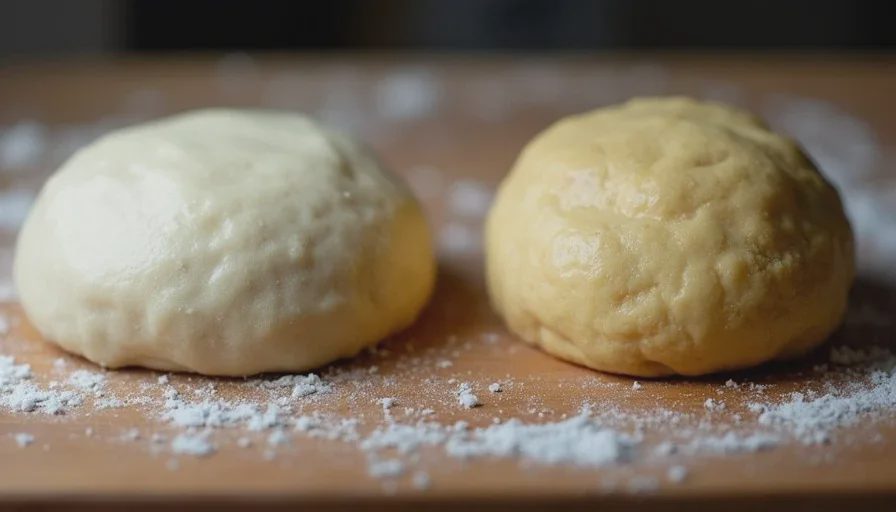
Common myths that waste time
“Knead for ten minutes or the bread will fail.” Not true. Many doughs develop enough structure with short mixes and a series of folds over a couple of hours. Time can replace some of the work.
“More gluten is always better.” Only if you are making chewy bread. For cakes, biscuits, and most cookies you want to limit gluten development. That is why those recipes say mix until just combined.
“Sourdough has less gluten.” The long fermentation does break down some proteins through enzyme activity, which is one reason long-fermented bread can feel easier to digest for some people. The network is still present and necessary for the loaf to rise.
“You can feel the gluten forming.” You can feel the dough changing. The actual molecular linking is not something your hands detect directly, but the results — elasticity, smoothness, strength — are clear once you have compared a few doughs.
How I use this knowledge on a normal baking day
When I mix a sourdough loaf I know the first shaggy stage is just hydration. The folds over the next few hours are what organize the network. I stop folding when the dough feels stronger and starts to hold its shape better. I do not chase a perfect windowpane every time; I chase a dough that feels elastic and alive.
When I make the chocolate cake or the cookies, I deliberately stop mixing as soon as the flour disappears. I do not want a strong network there. The difference in approach is the whole point of understanding gluten. It is not mysterious. It is a tool you strengthen when you need structure and limit when you need tenderness.
You do not need a biology degree to bake well. You need to know that two proteins in flour link up when they get wet and moved, that the strength of that link depends on flour, water, work, and time, and that different baked goods want different amounts of that strength. Once those pieces are clear, the recipes stop feeling like arbitrary instructions and start making sense.
The dough will tell you most of what you need to know if you pay attention to how it stretches and resists. The science just gives you a cleaner way to interpret what your hands already notice.


No comments yet.