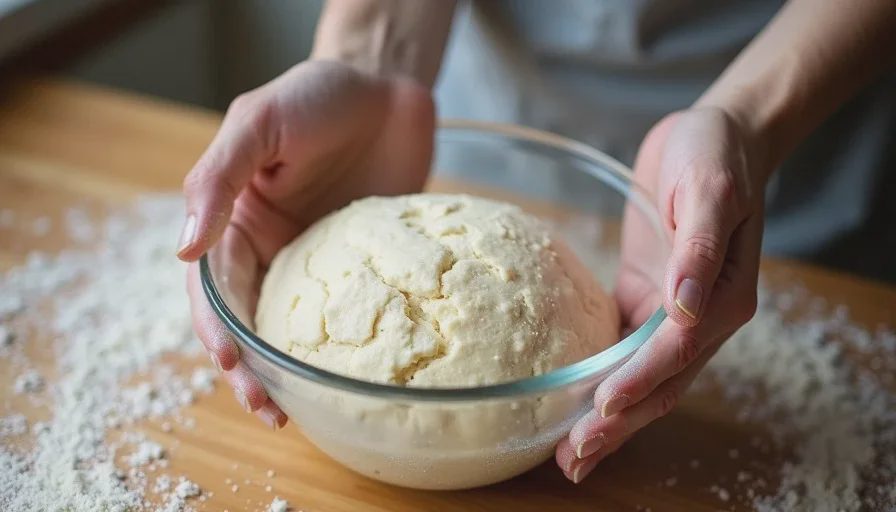
The first time I saw a recipe listed at 80 % hydration I almost closed the tab. The number felt like a warning. I imagined soup that could not be shaped and a guaranteed mess. Then I made the dough anyway, watched it change over a few hours of folds, and realized the percentage was only a starting point. The dough itself told me more than the number on the page.
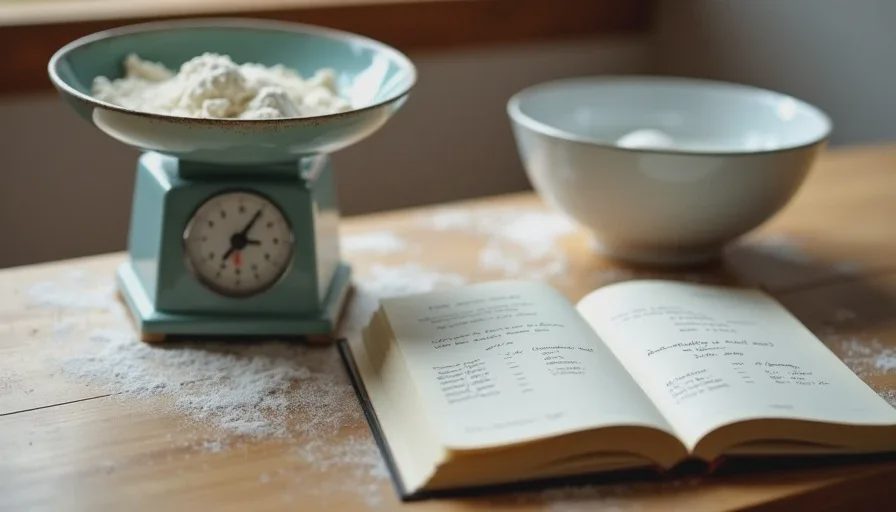
Hydration percentage is simply the weight of the water divided by the weight of the flour, multiplied by 100. If you use 500 g of flour and 350 g of water, the hydration is 70 %. Starter and other liquids are sometimes included, sometimes not. Recipes are not always consistent about this, which is one reason the same stated percentage can feel different from one source to another.
The number is useful for comparison and for repeating a result. It is not a moral standard or a test of skill. A 65 % dough is not “easier” or “better” than a 75 % dough. They are different tools for different results.
What the percentage actually changes
Lower hydration (60–68 %) produces a firmer, less sticky dough that is easier to shape by hand. The crumb tends to be tighter. These doughs are forgiving for beginners and for shapes that need clear definition.
Medium hydration (68–75 %) is the range most everyday sourdough and yeasted breads sit in. The dough is soft and slightly tacky but still manageable with lightly wet or floured hands. The crumb can open nicely without extreme handling skill.
Higher hydration (75–85 %+ ) creates a wetter, stickier dough that spreads more easily and can produce a more open, irregular crumb. These doughs need more strength from folds or mixing and benefit from cold proofing and careful shaping. They are not inherently superior. They are simply different.
The same percentage will feel different depending on the flour. A 75 % dough made with high-protein bread flour feels stronger and less soupy than the same percentage made with lower-protein all-purpose or a high percentage of whole wheat. Whole-grain flours absorb more water, so a dough that looks correct on paper can feel dry. In that case you add water until the feel is right, even if the final percentage drifts higher.
Why the number scares people (and when you can ignore it)
Beginners fear high hydration because early attempts often turn into sticky frustration. The dough clings to fingers, the counter, and the bench scraper. Shaping feels impossible. The usual response is to keep adding flour until the dough behaves. That works in the moment but changes the intended texture and can make the crumb denser than planned.
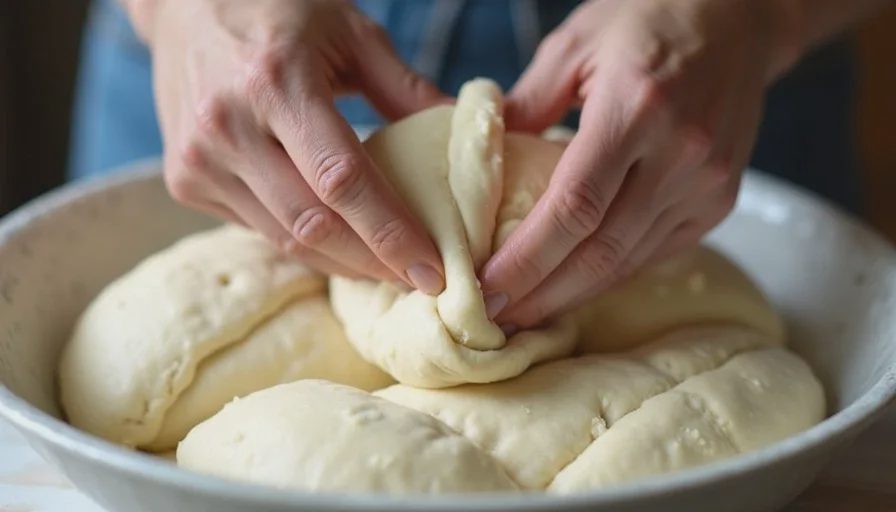
The better response is to accept a certain amount of stickiness and use technique instead of extra flour: wet hands, a bench scraper, coil folds in the bowl, and time. The dough becomes less sticky as the gluten network develops and as it cools. A dough that feels unmanageable at the start of bulk is often perfectly workable after three or four sets of folds and a rest.
You can ignore the exact percentage when you are comfortable reading dough. Mix the flour and most of the water, then hold back 20–30 g of water. Add it only if the dough still feels tight after the initial mix and rest. This is how I adjust for Denver’s dry air and for flour that varies from bag to bag. The final number might land at 71 % or 74 % instead of the recipe’s 72 %. The loaf does not care what the calculator says. It cares how the dough feels when it is time to shape.
Practical ranges I actually use
For a first sourdough loaf I usually stay around 70 %. It is soft enough to give a good crumb but firm enough that a newer baker can shape it without panic. Once the feel of that dough is familiar, moving to 75 % is a small step rather than a leap.
For enriched doughs or sandwich breads I often drop to 65–68 % so the loaves hold a clean shape and slice neatly. For focaccia or a very open rustic loaf I may go to 78–80 % and handle the dough almost entirely in the bowl with wet hands until it is time to tip it into the pan.
Salt, starter, and any add-ins change the effective feel. A large amount of starter (which is itself a 100 % hydration mixture) adds both water and flour. Some bakers calculate total hydration including the starter; others list only the water added to the final dough. Neither method is wrong as long as you are consistent when you repeat the recipe.
How to move the number without ruining the dough
If a dough feels too stiff, add water a teaspoon at a time during the early folds. If it feels too wet and will not hold any shape after reasonable development, the next batch can start with 10–20 g less water. Small changes are enough. Jumping from 70 % to 85 % in one step is how people end up convinced that high hydration is impossible.
Temperature matters. Warm dough feels softer and stickier than the same dough when cold. This is why a dough that seems unmanageable at the end of bulk often shapes beautifully after a night in the refrigerator. The hydration did not change. The consistency did.
At altitude the dry air and lower boiling point can make doughs lose moisture faster during bulk and proof. I often start on the slightly higher side of a range and then adjust by feel. The percentage is a reference, not a rule that overrides the dough in front of you.
The only rule worth keeping
Use the number to communicate and to repeat success. Use your hands to decide whether the dough is right. If a recipe says 80 % and the dough feels like batter after proper mixing and folds, something is off—flour absorption, measurement, or ambient conditions. Fix the feel. Do not obey the number out of principle.
I still write hydration percentages in my own notes. They help me remember what worked. But when I teach someone or when I mix on a day when the flour seems different, I watch the dough more than the calculator. The percentage is a useful map. It is not the terrain.
Once you stop treating the number as a verdict on your skill, it becomes what it always was: a simple ratio that describes how wet the dough started. The rest is observation, small adjustments, and the willingness to let the dough teach you what it needs that day.
The dough will tell you. The percentage is just the language we use to talk about it afterward.


No comments yet.