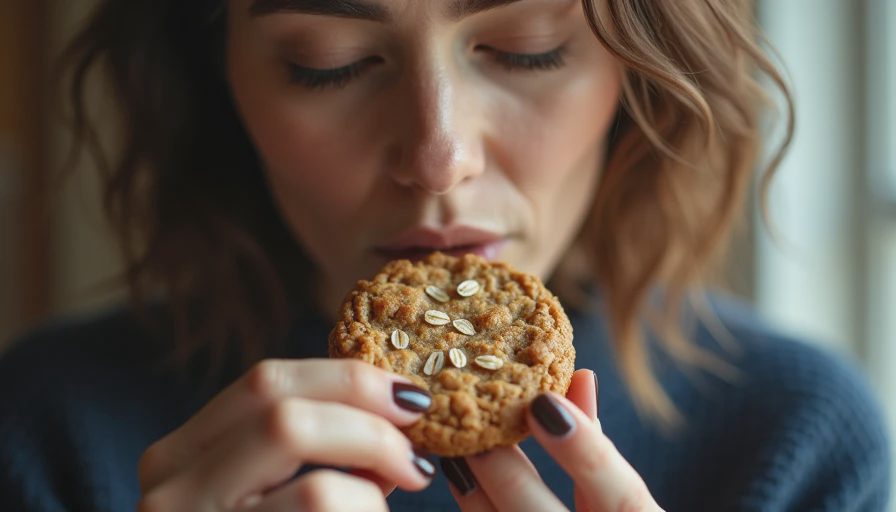
I made my first batch of oat cookies no flour on a Tuesday when the kitchen was cold, Lily was asking for a snack, and I had exactly one egg left. The cookies were supposed to be a quick experiment. Instead, they became the recipe I make when I want something sweet without opening a new bag of flour. They are chewy in the middle, lightly crisp around the edges, and sturdy enough to carry in a lunch container.
This is not a delicate bakery cookie. It is an honest home cookie made from rolled oats, brown sugar, butter, and peanut butter. The oats provide the structure that wheat flour normally supplies, while the egg binds everything together. That means the mixing order matters, and so does the resting time. Skip either one and you can end up with a puddle of sugary oats.
What you need for oat cookies no flour
This recipe makes 14 medium cookies. Weighing the ingredients is the easiest way to repeat the result, but I have included practical volume measurements too.
Use 150 grams old-fashioned rolled oats, about 1 2/3 cups; 100 grams creamy peanut butter, about 1/3 cup plus 1 tablespoon; 85 grams unsalted butter, melted and cooled for 10 minutes; 90 grams packed light brown sugar; 50 grams granulated sugar; one large egg, about 50 grams without the shell; 1 teaspoon vanilla extract; 1/2 teaspoon baking soda; 1/2 teaspoon fine salt; and 85 grams chocolate chips, roughly 1/2 cup.
Do not use quick oats unless that is all you have. They absorb liquid faster and produce a softer, more compact cookie. Steel-cut oats are not a substitute here; they stay hard and chewy in the wrong way. For the peanut butter, regular creamy peanut butter gives the most predictable texture. Natural peanut butter can work, but stir it thoroughly first because separated oil makes the dough greasy.
Let the melted butter cool until it feels barely warm. Hot butter can partially cook the egg and make the dough look curdled. That is not a disaster, but it gives you one more problem to solve before the cookies even reach the oven.
How to make oat cookies no flour
Line one large baking sheet with parchment and heat the oven to 350 degrees F. If your baking sheet is dark metal, place it on the middle rack and start checking the cookies at 10 minutes; dark pans brown the bottoms quickly.
In a medium bowl, whisk the cooled butter, peanut butter, brown sugar, and granulated sugar until smooth. Add the egg and vanilla and whisk again for about 30 seconds. The mixture should look glossy and cohesive, not separated into oily streaks.
In a second bowl, stir the oats, baking soda, and salt. Add the dry mixture to the peanut butter mixture and fold with a spatula. Stir in the chocolate chips. The dough will be thick but slightly sticky. Cover the bowl and let it rest for 15 minutes. This small pause is the science note: the oats need time to absorb moisture before you judge the consistency.
Scoop 14 portions, about 45 grams each, onto the baking sheet. Leave at least 2 inches between them. Press each mound into a disk about 1/2 inch thick. These cookies spread some, but not dramatically, so a tall scoop will stay thick and underbaked in the center.
Bake for 11 to 13 minutes, rotating the pan once at the halfway point. The edges should look set and lightly browned, while the centers should still look a little soft. Leave the cookies on the hot pan for 10 minutes before moving them to a plate or cooling rack. They finish setting as they cool.
It does not matter if they come out a little uneven. Mine usually do. It matters that you pull them before the center looks completely firm, because a fully firm center in the oven becomes a dry cookie on the counter.
The failures I have actually made
If your oat cookies no flour spread into thin, lacy circles, the butter was probably too hot, the dough did not rest, or the baking sheet was warm from a previous batch. Chill the mixed dough for 20 minutes and use a cool pan. If the dough still spreads, add 15 grams of oats and wait another 10 minutes before scooping.
If the cookies crumble when you lift them, they were either overbaked or made with a small egg. The centers should look underdone when the pan leaves the oven. For a batch that is already crumbly, let the cookies cool completely before moving them; warm oat cookies are fragile. Next time, weigh the egg or use a standard large egg rather than a small one.
If they taste flat, salt is the likely culprit. Half a teaspoon sounds minor, but oats, peanut butter, and brown sugar need it. If your peanut butter is salted, use 1/4 teaspoon salt instead. Adding cinnamon is also lovely: use 1 teaspoon with the dry ingredients, or add 75 grams raisins for a softer, fruitier version.

Easy changes without ruining the texture
For oat cookies no flour with a deeper flavor, replace 20 grams of the brown sugar with maple syrup. The dough will be softer, so chill it for 25 minutes and expect slightly darker edges. I would not replace all the sugar with maple syrup; that adds too much liquid and makes the cookies spread.
You can swap the peanut butter for creamy almond butter at a one-to-one weight ratio. Sunflower seed butter also works, although the cookies may have a greener tint after baking. Use dark chocolate chips for a less sweet result, or fold in chopped walnuts for crunch. Keep the total additions near 85 grams. Too many chips and nuts interrupt the oat network, which is a fancy way of saying the cookies stop holding together.
For a breakfast-style version, reduce the granulated sugar to 25 grams and add 40 grams dried cranberries. These are still cookies, not a bowl of oatmeal wearing an apron, but the reduced sweetness works well with coffee.
Storage and serving
Keep the cooled oat cookies no flour in an airtight container at room temperature for up to four days. Place parchment between layers if your kitchen is warm. They soften slightly overnight, which I actually prefer. To bring back crisp edges, warm one cookie in a 325-degree F oven for 4 minutes rather than microwaving it.
The baked cookies freeze well for up to two months. Freeze them in a single layer first, then transfer them to a freezer bag. Thaw at room temperature for 30 minutes. You can also freeze scooped dough portions for up to six weeks. Bake them from frozen at 350 degrees F for 14 to 16 minutes, pressing the frozen mounds into disks first.
These oat cookies no flour are best when the centers are still a little soft and the edges have earned their color. Do not chase perfection; chase the chewy middle. Put on the apron and go ahead and do it. The dough will forgive you. So will I.


No comments yet.