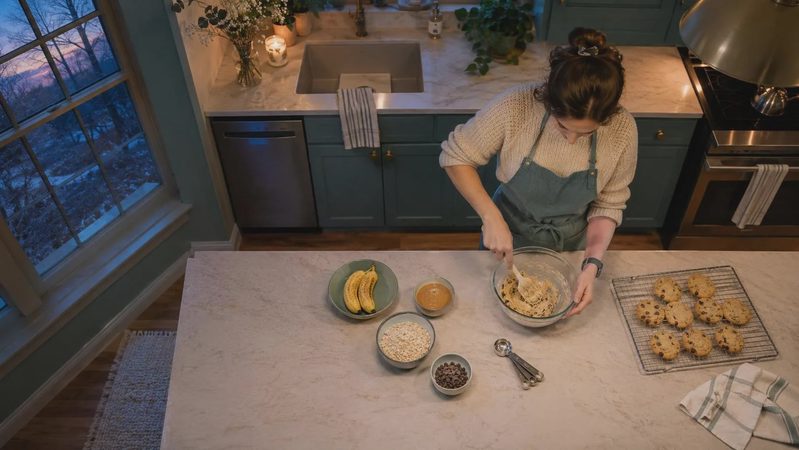
Peanut butter and honey bars are the sort of bake I make when Lily is asking for a snack, Mark is looking for something after school, and I have exactly one mixing bowl left in the clean cupboard. They are chewy in the middle, lightly crisp at the edges, and sweet without tasting like a candy bar. No stand mixer, special pan, or heroic baking skills are needed. Put on the apron and go ahead and do it.
Why these bars work
The useful little bit of science here is that honey holds moisture. That keeps the finished bars soft for several days, while brown sugar adds a deeper flavor and enough structure to stop the middle from becoming pudding. Rolled oats give the mixture something to grip, and melted butter coats them so they toast instead of turning soggy.
You need 115 grams unsalted butter, melted and cooled for five minutes; 160 grams creamy peanut butter; 140 grams honey; 90 grams packed light brown sugar; one large egg, about 50 grams without the shell; 5 grams vanilla extract; 150 grams old-fashioned rolled oats; 125 grams all-purpose flour; 4 grams baking soda; 3 grams fine salt; and 85 grams semisweet chocolate chips. A natural peanut butter that separates can work, but stir it thoroughly first. If the oil is sitting on top, measure after mixing, not before.
Line an 8-inch square metal pan with parchment, leaving two flaps over the sides. The parchment is not decoration; it is your escape route when the bars are cool and sticky. Heat the oven to 350°F. Metal gives the edges a little more color than glass, which is exactly what I want here.
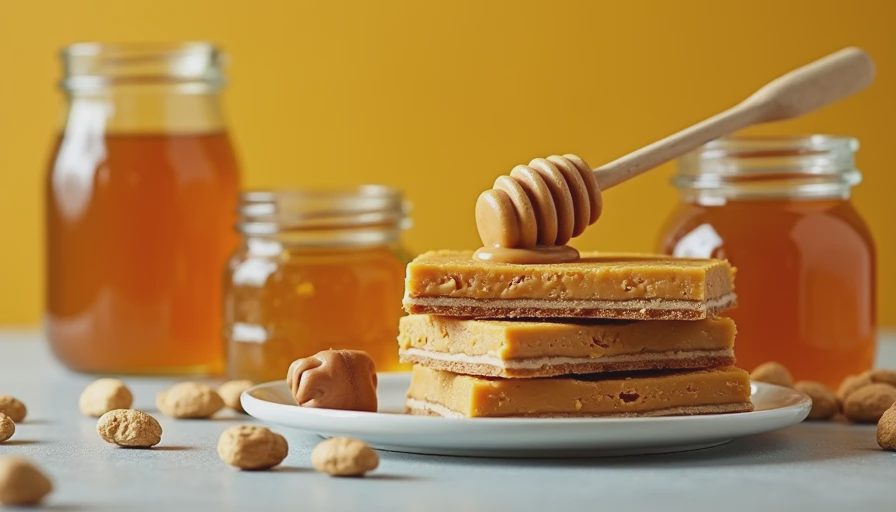
How to make peanut butter and honey bars
Pour the melted butter into a medium bowl. Whisk in the peanut butter, honey, brown sugar, egg, and vanilla until the mixture looks glossy and mostly smooth. A few tiny peanut butter streaks are fine. Add the oats, flour, baking soda, and salt. Stir with a sturdy spatula until no dry flour remains, then fold in the chocolate chips.
Scrape the dough into the lined pan. It will be thick, and it will resist spreading like it has a personal grudge. Wet your fingertips with water and press it into an even layer, especially into the corners. Do not pack it down with all your strength; a firm, even press is enough. The dough should be about three-quarters of an inch thick.
Bake for 22 to 27 minutes, rotating the pan once at the halfway point. The edges should be golden brown, while the center should look set but still slightly soft. If you wait for the center to look fully firm, the bars will be dry after cooling. This is the classic failure mode: overbaking in the name of certainty. Pull them when the middle has a faint wobble, not a wet slosh.
Cool the pan on a rack for at least 45 minutes. I know. The kitchen smells like peanut butter and toast, and waiting feels unreasonable. But warm bars crumble easily because the butter and honey have not finished settling. Lift the slab by the parchment, cut it into 16 squares, and accept that the first one may have a ragged edge. Ragged edges are still dessert.
Troubleshooting the batch
If your peanut butter and honey bars spread thinly and look greasy, the peanut butter was probably very loose or the butter was still hot when it met the egg. Chill the mixed dough for 20 minutes before pressing it into the pan next time. You can also add 15 grams of flour, but do not keep adding flour until the mixture becomes stiff; that creates dry, bready bars.
If the bars are crumbly, they were likely cut too soon or baked several minutes too long. Let the slab cool completely before slicing. For a batch already baked dry, warm one square for 10 seconds and serve it with yogurt or a scoop of vanilla ice cream. It will not become chewy again, but it can still be delicious.
If the center sinks, the pan may have been removed while the middle was genuinely wet, rather than just soft. Check the difference with a toothpick near the center: moist crumbs are good, shiny batter is not. If the edges are dark before the center sets, your pan may be darker than mine. Reduce the oven to 340°F and add three to five minutes.
Easy ways to change the recipe
For peanut butter and honey bars with more crunch, replace 40 grams of the oats with chopped roasted peanuts. Stir them in with the chocolate chips. For a less sweet version, use 70 grams of chocolate chips and add 2 grams of cinnamon. Dark chocolate works particularly well against the honey, while white chocolate makes the bars sweeter and softer.
You can skip the chocolate and add 75 grams of raisins, dried cherries, or chopped dates. Dried fruit adds chew, but chop large pieces so one sticky pocket does not pull apart the square. A tablespoon of sesame seeds on top is good too, though I prefer them mixed into the dough because toppings can fall off into the toaster oven.
Do not substitute quick oats one-for-one if you want a hearty texture. They absorb liquid faster and can make the center dense. If quick oats are all you have, use 135 grams and expect a softer, more uniform bar. Steel-cut oats are not a practical swap here; they stay hard and steal moisture from the surrounding crumb.
Storage and serving
Peanut butter and honey bars keep in an airtight container at room temperature for four days. Separate layers with parchment so the tops do not stick. They can also be frozen for up to two months. Wrap individual squares in parchment, place them in a freezer bag, and thaw at room temperature for about an hour.
For breakfast, I serve one with plain Greek yogurt and sliced banana. For a lunchbox, let the square cool completely before wrapping it, or condensation will make the surface tacky. A ten-second microwave warm-up brings back the soft center, but use a plate because melted chocolate has a talent for escaping.
This recipe makes peanut butter and honey bars that are sturdy enough to carry, tender enough to feel like a treat, and forgiving when your oven runs a little hot. Mine have emerged too brown at the corners and slightly lopsided in the pan. Nobody at my kitchen table complained. It does not matter if it is perfect or not, just make it delicious. The dough will forgive you. So will I.

No comments yet.