Gérard could laminate dough in his sleep. He would roll, turn, and fold while talking about something else, and the finished croissants came out with a shatter that filled the bakery. I learned the basic motions under him. I also learned that the same dough at home, in a kitchen that is sometimes too warm and an oven that does not hold steam the same way, is a different creature entirely.
I do not teach classic laminated pastry on this site. Not because it is impossible at home, but because the gap between effort and consistent result is wider than most people admit. The dough has to stay cold. The butter has to stay in distinct layers. The turns have to be even. A few degrees of kitchen temperature or a slightly soft butter block can collapse the whole structure. Many home bakers end up with dense, greasy, or flat pastries after three days of work and then decide they are simply bad at pastry. That conclusion is usually wrong. The method is just unforgiving outside a controlled bakery environment.
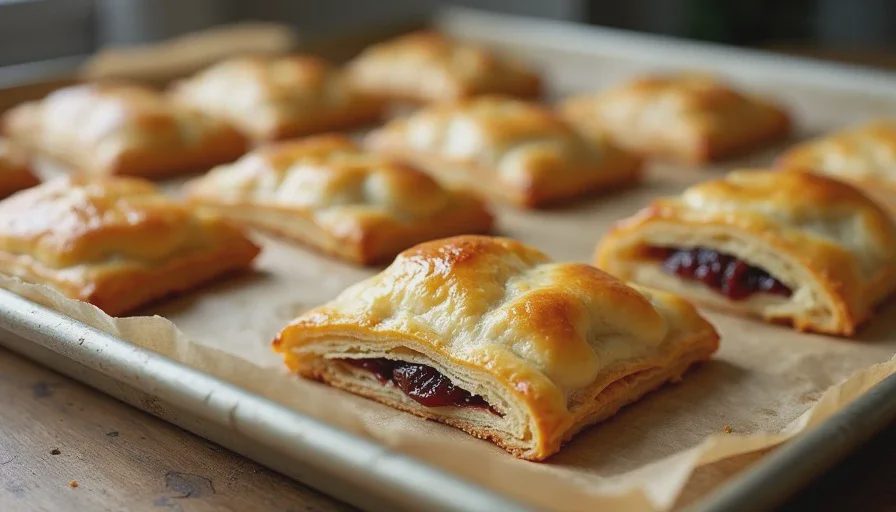
So I will not walk you through a full croissant dough or classic puff here. What I will give you is the version I actually reach for when I want something flaky and buttery without the stress. It is a rough puff (sometimes called blitz puff). The layers are real. The flavor is excellent. The process fits into a normal day.
Why classic lamination fights the home kitchen
Commercial laminating happens in cool rooms with dough sheeters or large cold benches and ovens that deliver strong, even heat. At home the butter softens while you roll. The dough warms under your hands. Rest times get cut short because life intervenes. The oven lacks the steam and thermal mass that help the layers separate cleanly. You can succeed, but the margin for error is narrow and the learning curve is long.
I made proper croissants at home a few times after the apprenticeship. Some were good. None were as consistent as the bakery ones, and each batch took more mental energy than the result justified for a family of three. Lily does not require a perfect honeycomb crumb. She requires something that tastes like butter and flaky pastry. Rough puff delivers that with far less risk.
The rough puff I make instead
This dough gives you distinct layers without the precise butter block and multiple rested turns of classic puff. You cut the butter into the flour, roll and fold a few times, and the layers form well enough for excellent results.
Ingredients (enough for a tray of pastries or two galettes)
250 g all-purpose flour
5 g fine sea salt
200 g cold unsalted butter, cut into small cubes
120–130 g ice water
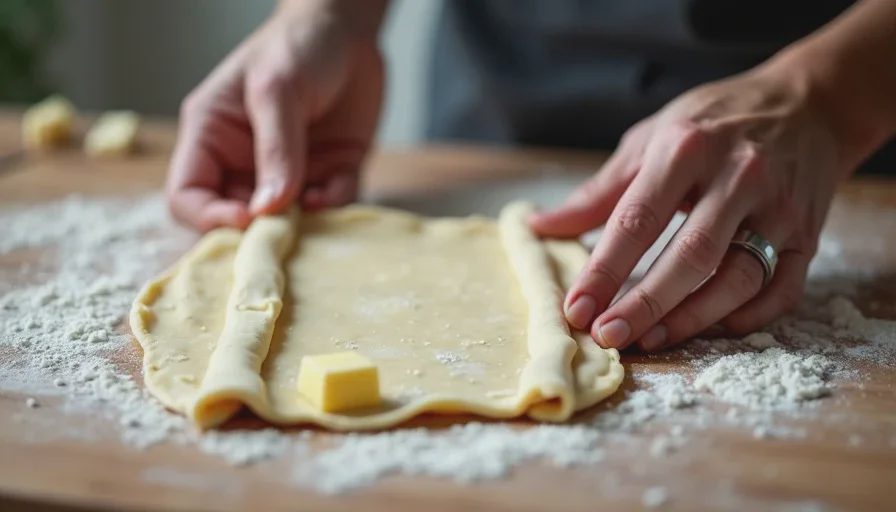
Put the flour and salt in a bowl. Add the cold butter cubes and toss them to coat. Using a pastry cutter or your fingers, cut the butter in until you have a mix of floury crumbs and some larger, flattened pieces of butter about the size of hazelnuts. The visible butter is what creates the layers. Do not work it into a uniform meal.
Add 120 g of the ice water and stir with a fork or your hand until the dough starts to come together. If it is too dry to form a rough mass, add the remaining water a teaspoon at a time. Turn the shaggy dough onto a lightly floured counter. Press it into a rectangle. It will look messy. That is correct.
Roll the dough into a long rectangle about ½ inch thick. Fold it into thirds like a letter. Turn the dough 90 degrees, roll again, and fold into thirds once more. Wrap the dough and refrigerate it for 30–45 minutes. Repeat the roll-and-fold process one more time (two more folds). Wrap and chill for at least 1 hour, or up to overnight.
The dough is now ready. It will not have as many theoretical layers as classic puff, but the butter pieces are large enough and the folds are sufficient to create real flakiness in a home oven.
How I use it
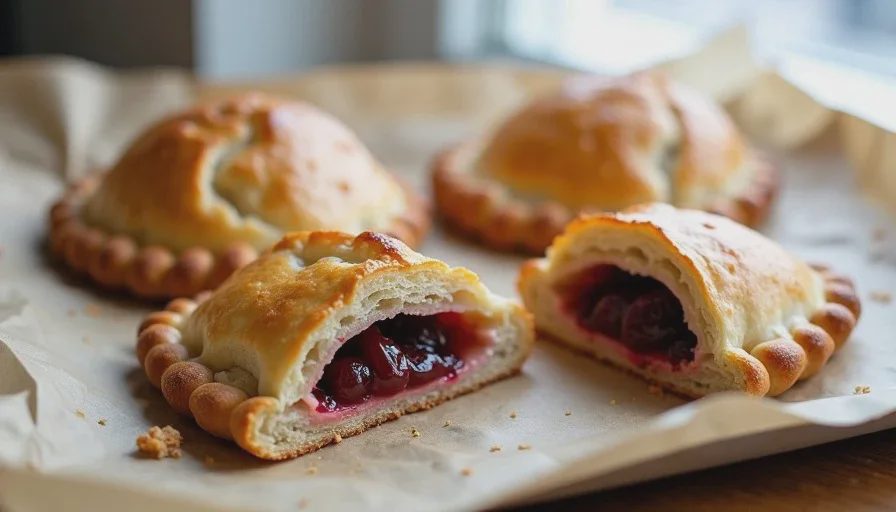
For simple pastries, roll the dough to about ⅛–¼ inch thickness. Cut into rectangles or squares. Add a spoonful of jam, chocolate, or a simple cream-cheese filling, fold or leave open, seal the edges, and chill the shaped pieces for 15–20 minutes. Brush with egg wash if you want color. Bake at 400°F (200°C) for 18–25 minutes until deeply golden and the layers are visible at the edges.
For a galette, roll a circle, pile on seasoned fruit or savory filling, fold the edges over, and bake at 375–400°F until the crust is browned and the filling is bubbling. The dough is sturdy enough to handle juicy fruit without turning soggy if you do not overload it.
Leftover dough can be wrapped and refrigerated for two days or frozen for a month. I often make the full batch, use half, and freeze the rest.
What this dough will and will not do
It will give you flaky, buttery pastry with visible layers and good flavor. It will tolerate a slightly warmer kitchen better than classic laminated dough. It will forgive small irregularities in rolling. It will not produce the identical delicate honeycomb of a perfect bakery croissant. If that specific texture is the only thing you want, you will eventually need to practice classic lamination under cool conditions. For most of the desserts I actually serve, rough puff is enough.
In Denver the dry air can make the dough feel a little tighter. If it cracks while rolling, let it rest a few more minutes or brush off excess flour. The butter still creates steam and lift the same way.
The honest reason I draw the line
I want the recipes on this site to be things a home baker can finish and feel good about eating. Classic laminated pastry often fails that test for people who do not already have the feel for it. The disappointment is out of proportion to the learning value when a simpler method gets you 80–90 % of the pleasure with far less risk of a greasy, flat result.
I still respect the full technique. I still use it at the bakery when that is the job. At home I reach for the version that lets me bake on a Tuesday and have something excellent on the table without a three-day project and a prayer. That is the pastry I will teach. The other one can stay in the books and the professional kitchens for now.
Make the rough puff. Keep the butter cold and the folds simple. Bake it until the color is deep. The layers will be there. The flavor will be there. And you will not have to wonder whether the dough is angry with you.

No comments yet.