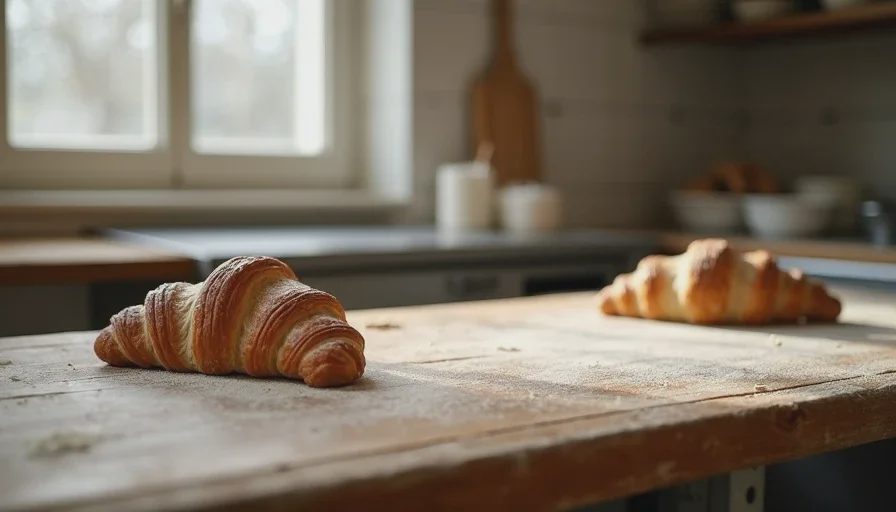
Gérard was already in the bakery when I arrived most mornings. He would look at the dough I had left to rest, poke it once, and tell me what was wrong with it in a mix of French and the English words he considered necessary. Soft. Tight. Dead. Again. He did not ask how I was. He did not care that I had a statistics degree or that I had taught myself from books and forums. He cared whether the dough felt right and whether I could fix it before the oven was ready.
I spent eight months as his apprentice. I shaped and scored thousands of loaves. I laminated croissant dough until my shoulders ached. I was yelled at for hesitation, for uneven pressure, for letting the butter get too warm, for scoring like I was afraid of the loaf. I left with flour permanently worked into the seams of every apron I owned and a set of standards I still use.
This is not a story about a charming mentor who believed in me. It is a story about a grumpy French baker who demanded competence and, in the process, gave me a clearer picture of what matters in dough than I had managed to assemble on my own.
The standard was the point
Gérard did not lower the bar because I was new. If the croissant dough had butter leaking through the layers, he made me see it and then make the next batch correctly. If the score on a batard was timid, he took the lame and showed the cut once, fast, then handed it back. “Again.” There was no participation trophy. There was only the dough in front of you and whether it met the requirement.
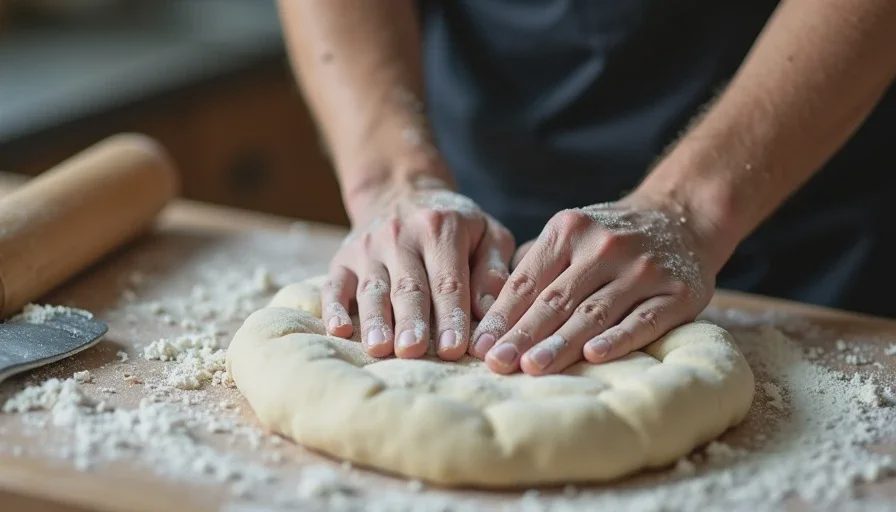
That approach was hard on the ego and useful for the work. Home baking culture often softens every edge. Recipes promise success. Photos show only the perfect result. The gap between that presentation and the actual first attempts can make people quit. Gérard’s bakery had no such gap. The standard was visible, the corrections were immediate, and the work continued. Competence came from repetition under a clear expectation, not from encouragement alone.
I still keep a version of that standard at home. Not the yelling. The clarity. If the dough is under-fermented, I say so in my notes. If the shape lacks tension, I name it. The loaf does not improve through vague optimism. It improves when the problem is specific and the next attempt addresses it.
What the yelling was actually about
Most of the volume was about attention. A moment of distraction showed up in the dough as a weak fold, a torn surface, or a score that dragged. Gérard treated those moments as unacceptable because in a production bakery they cost time and product. The lesson underneath the volume was simpler: the dough notices when you are not present. So do the people who will eat it.
I do not yell at myself in the kitchen. I do, however, notice when my attention has left the bench. The phone, the clock, the mental list of other tasks—all of them show up in the finished loaf if I let them. The apprenticeship made that connection physical. A distracted fold feels different under the hands. Once you have been told to redo it enough times, you start catching the distraction earlier.
Technique that transferred
Several specific things moved directly from his bench to mine.
Cold dough scores more cleanly. He insisted on it. I still pull loaves straight from the refrigerator to score.
Surface tension is not decorative. A loaf that is not shaped tightly enough will open wherever it wants. He would make me reshape it until the skin was taut. I still do the same when a pre-shape looks slack.
Butter temperature in lamination is not a suggestion. Too warm and the layers merge. Too cold and they shatter. The window is narrow. Even though I rarely make full laminated pastry at home, the same principle applies to any dough with visible fat pieces: temperature control is part of the structure.
Taste the dough and the starter. He would sometimes ask what the dough smelled like or how the starter tasted that day. It forced a kind of attention that numbers alone do not provide. I still do this when something feels off.

What I left behind
I did not bring the volume home. I did not bring the insistence that every loaf look identical. Home baking has different goals. A slightly irregular ear or a crumb that is a little tighter than the bakery standard is not a crisis when the people eating the bread are my family and the occasional neighbor.
I also left behind the idea that suffering is proof of seriousness. Long days and harsh corrections were the conditions of that particular apprenticeship. They are not requirements for making good bread at home. Competence can be built with less damage. I needed the intensity to break certain habits. I do not believe everyone else does.
What remains useful years later
The most lasting gift was the refusal to pretend. Gérard did not pretend a weak dough was fine. He did not pretend a bad score would bake out. He did not pretend that good intentions change the physical result. That honesty, stripped of the yelling, is still the most useful tool I have.
When a loaf fails, I try to name the failure the way he would have: under-fermented, poor tension, dull blade, oven not hot enough. Then I change one thing. The list of ten loaves I threw away exists because of that habit. The clearer notes in my baking journal exist because of it. The willingness to throw something away and start again exists because of it.
I still work part-time at the same bakery. Gérard is still grumpy. He still corrects me when the dough is not right, though the corrections are shorter now. I still learn things from watching him handle a hundred loaves with the same attention he once demanded from me on a single tray.
At home I bake with more patience and less fear than I did before those eight months. I know what a strong dough feels like. I know what a clean score looks like. I know that the oven cannot save what the hands and the fermentation have not prepared. And I know that a perfect appearance is less important than a loaf that tastes like it was made with attention.
The grumpy Frenchman never said any of that in a gentle way. He just made me meet the standard until the standard became mine. The flour is still in the apron. The lessons are still in the work. The dough, as always, will forgive the imperfect attempts. The difference is that now I can see more clearly what needs forgiving and what needs correcting.
That is what eight months of being yelled at over croissants actually taught me.


No comments yet.