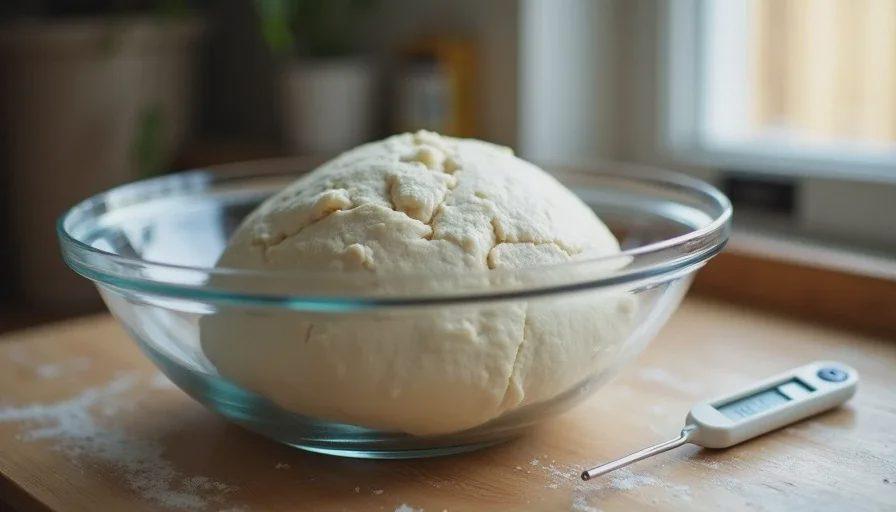
I used to think dough that refused to rise was a yeast problem or a starter problem. Most of the time it was a temperature problem. The kitchen was cooler than I realized, the water had been too cold, or the dough had been left near a drafty window. Once I started treating temperature as a full ingredient instead of background information, the unpredictable bulk ferments and stubborn proofs became much easier to read.
Yeast and the microbes in a sourdough starter are living organisms. Their activity level depends heavily on temperature. Enzymes in the flour that break down starch into sugars for those microbes also work faster or slower depending on heat. The same dough formula can double in two hours at 78°F and need six or more hours at 68°F. The recipe did not change. The environment did.
How temperature actually changes the dough
In the range most home bakers work in, warmer temperatures speed everything up. Yeast produces gas faster. The starter becomes more acidic more quickly. Enzyme activity increases, so more food becomes available for the microbes. The dough rises sooner and can over-proof if left unchecked.
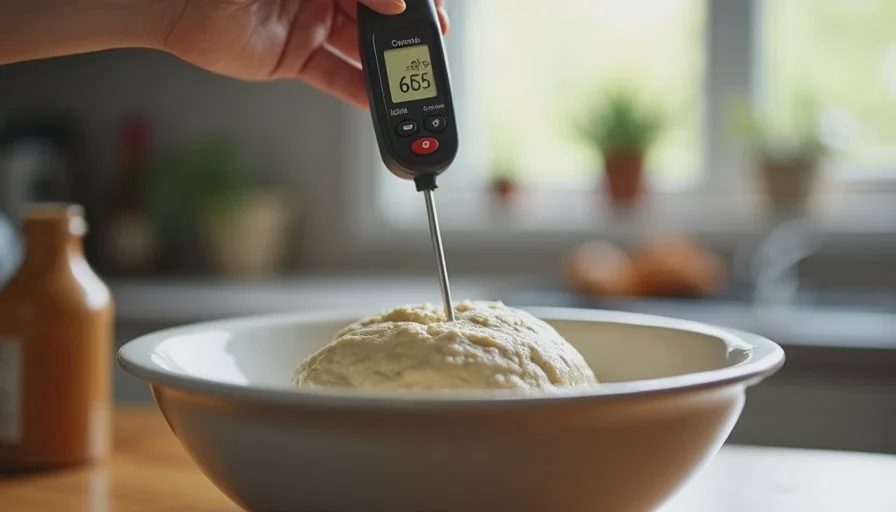
Cooler temperatures slow the same processes. Gas production drops. Acidity develops more gradually. The dough takes longer to show visible rise. This is not failure. It is simply reduced activity. A dough that looks inert at 65°F is often still fermenting, just at a pace that is hard to see if you expect the timing from a warmer kitchen.
Above about 85–90°F the yeast begins to stress and can produce off flavors. Below about 50°F activity becomes very low, which is why refrigerator proofing works for long, slow flavor development. The cold does not stop the process completely; it stretches it out over many hours.
Gluten also feels different at different temperatures. Cold dough is firmer and easier to score cleanly. Warm dough is softer, stickier, and more extensible. This is why many bakers shape cold and why a dough that feels slack at the end of bulk often firms up after a night in the fridge.
Practical temperature ranges I use
Water temperature for mixing
I aim for a final dough temperature around 75–78°F for most sourdough and yeasted breads when I want a predictable bulk. In a cool kitchen I use warmer water (80–85°F). In a warm kitchen I use cooler water (70°F or even slightly less). The simple goal is to land the mixed dough in a range where fermentation moves at a moderate, readable pace.
Bulk fermentation
72–78°F is the sweet spot for most of my loaves. Below 70°F I expect the bulk to take significantly longer and I plan accordingly. Above 80°F I watch the dough more closely and often shorten the schedule or move it to a cooler spot.
Final proof
Room-temperature final proofs are faster and more sensitive to small temperature swings. Cold proofing in the refrigerator (usually 38–42°F) slows yeast activity enough that a 12–16 hour window is comfortable. Flavor improves and scoring becomes easier. This is the method I use most often at home.
Starter
A starter kept around 75°F will peak faster and taste milder than one that matures slowly in a cooler room. If my kitchen is cold, I find a slightly warmer spot (top of the fridge, near a pilot light, or inside the oven with only the light on) so the starter stays on a usable schedule.
What cold dough looks like and how to respond
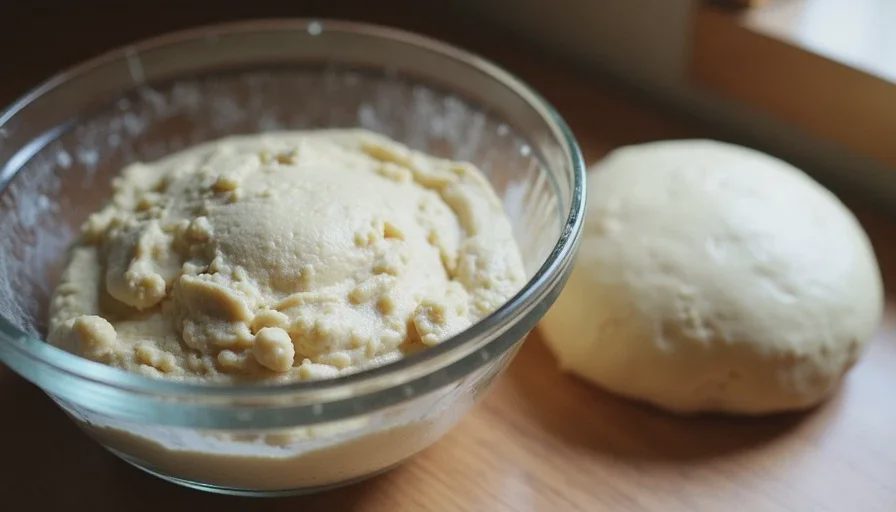
A dough that is too cold will show little visible rise even after several hours. It may feel dense and less jiggly than expected. The surface might look smooth instead of aerated. This is the point where people often panic and add more yeast or conclude the starter is dead. Most of the time the culture is fine. It is simply working slowly.
The practical responses are straightforward:
Move the dough to a warmer location.
Extend the bulk fermentation until the dough shows the expected rise and feel (usually 50–75 % growth and a light, aerated texture).
Use warmer water next time if the kitchen is consistently cool.
Accept that a cool bulk takes longer and plan the bake for later in the day or the next morning.
In Denver the nights are often cool even in summer, and the dry air can make the surface of the dough feel tighter. I check the actual temperature of the dough with a quick probe when things seem off. The air temperature in the room is not always the same as the temperature inside the dough, especially in a large batch.
Warm kitchens create the opposite problem
If the dough is rising much faster than the recipe suggests, the kitchen is probably warmer than the recipe assumed. The fix is equally simple: cooler water at mixing, a shorter bulk, or an earlier move to the refrigerator. Over-proofed dough from a warm kitchen is one of the most common causes of flat loaves. Temperature control prevents it more effectively than any other single adjustment.
How I treat temperature as a controllable ingredient
I no longer follow bulk times as fixed rules. I use them as estimates that assume a certain temperature range. When the kitchen is outside that range, I change the plan instead of forcing the original schedule. A cool day means a longer bulk or a warmer spot. A warm day means cooler water and earlier checks. The refrigerator remains the most reliable tool for stretching or pausing the process when timing does not match the rest of life.
I also stopped blaming the starter first. If Gus looks healthy but the dough is not moving, I check the temperature before I assume the culture needs an emergency feeding. Most of the time the thermometer explains more than another discard-and-feed cycle.
Temperature is silent only if you ignore it. Once you start measuring and adjusting for it, the dough becomes much more predictable. The same formula that seemed temperamental in a cold kitchen becomes reliable when you give it the conditions it needs. The yeast and bacteria were never the problem. They were simply waiting for the right amount of heat to do their work.
The dough will rise when the temperature allows it. Your job is to notice the condition and respond instead of waiting for a clock that was written for a different kitchen.


No comments yet.