My baking journey began with a bowl of dough and a week I would rather forget. I was working as a data analyst, staring at spreadsheets all day, when kneading bread gave my hands something useful to do. The first loaf was dense, pale, and faintly damp in the center. I ate two slices anyway. That is still my general philosophy: learn what went wrong, fix the next bake, and eat the evidence.
A good baking journey is not a collection of perfect photographs. It is a record of dough that overproofed, cakes that cracked, and pastries that looked slightly more rustic than intended. You do not need a professional oven or a counter covered in expensive equipment. You need a scale, a timer, patience, and enough curiosity to notice what the dough is telling you.
Start Your Baking Journey With Fewer Variables
When a bake fails, changing five things at once makes the result impossible to read. Start with one dependable formula and record the details. For a simple sourdough loaf, write down 500 grams bread flour, 350 grams water, 100 grams active starter, and 10 grams salt. Note your room temperature, mixing time, folds, proofing length, and oven temperature.
That little notebook became the most useful tool in my baking journey. My kitchen in Denver is dry, and winter dough often needs more time or slightly more water than the same recipe needs in July. On a cool 68-degree day, bulk fermentation may take five hours. In a warm kitchen near 78 degrees, the dough can move much faster. The clock matters, but the dough matters more.
Use your fingertips to check progress. A dough that feels tight and tears during shaping probably needs more rest. A dough that spreads immediately and feels fragile may have gone too far. Neither result means you are bad at baking. It means the dough received different conditions than the recipe writer had.

The Sourdough Lessons I Wish I Had Earlier
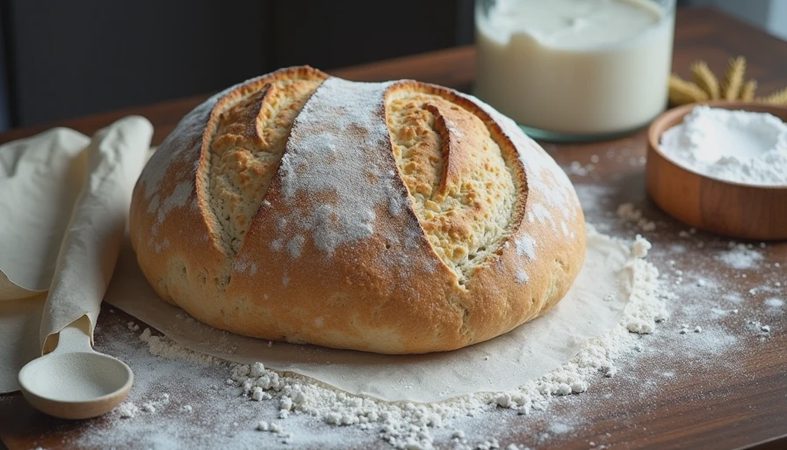
The biggest lesson from my baking journey is that a starter does not need to look dramatic to be useful. Gus, my starter, sometimes doubles in six hours and sometimes takes nine. I feed it 30 grams starter, 60 grams water, and 60 grams flour, then wait until it is domed, bubbly, and smells pleasantly tangy. A float test is not a requirement; activity and timing tell you more.
If your loaf is dense with a gummy stripe at the bottom, the likely causes are underproofing or slicing too soon. Let the finished loaf cool for at least one hour before cutting. If the crumb is tight throughout, give bulk fermentation more time and look for a smoother, airier texture before shaping. If the loaf collapses after scoring, it may have been overproofed. Bake it anyway if it can hold its shape, then use the slices for toast or breadcrumbs.
I once pulled a loaf from the oven that looked like a flour-dusted brick. Gérard, the grumpy baker who supervised my apprenticeship, said, “You made bread. Now learn from it.” His advice was less comforting than it sounds, but it worked. I measured the next dough carefully, shortened the proof, and stopped judging success by height alone.
Bread Is Not the Only Route Forward
Your baking journey does not have to center on sourdough. Yeast rolls, biscuits, muffins, and simple cakes teach the same useful skills: measuring accurately, reading texture, and controlling heat. A batch of dinner rolls is especially forgiving. Mix 360 grams flour, 240 grams warm milk, 45 grams melted butter, 25 grams sugar, 7 grams instant yeast, and 7 grams salt. Knead until smooth, let the dough rise until puffy, shape twelve rolls, and bake at 375 degrees Fahrenheit for about 20 minutes.
The most common failure is adding flour until the dough feels dry and easy to handle. That usually produces heavy rolls. Start with the measured amount and give the dough five minutes to hydrate before deciding whether it truly needs more. A slightly sticky dough can become soft and light after kneading.
For cakes, watch the oven rather than opening the door repeatedly. A cheesecake can sink from temperature changes, while a butter cake can collapse if the center is still liquid when removed. A crack is not a disaster. Cover it with powdered sugar, whipped cream, or fruit and call it character.

How to Build a Baking Journey You Can Repeat
A sustainable baking journey needs a rhythm that fits real life. Choose one weekend bake and one short weekday practice. On Saturday, make a loaf that needs several hours. On Wednesday, mix biscuits or a small batch of cookies that can be finished in under an hour. Repeating a recipe gives you better information than collecting twenty recipes you never make twice.
Keep ingredients in consistent containers and label opened yeast, flour, and starter jars with dates. Replace whole wheat flour that smells sharply bitter or rancid. Check your oven with an inexpensive thermometer if cakes repeatedly bake too quickly or bread remains pale after the stated time. Home ovens can run noticeably hotter or cooler than their display suggests.
Take photographs from the side and cut through the center of each loaf. Record the crumb, not just the crust. I also write one sentence after every bake: “Next time, proof 30 minutes longer,” or “Reduce water by 15 grams.” Those notes turn frustration into a small experiment instead of a personal verdict.
Honest Fixes for Common Baking Failures
If your sourdough is flat, look first at fermentation and shaping. A loose shape will spread, even when the flavor is good. Create surface tension by pulling the dough toward you across the counter, then rest it seam-side up in a floured basket. If the crust is too dark before the center is done, lower the oven temperature by 25 degrees or tent the loaf loosely with foil near the end.
If cookies spread into one thin sheet, the butter may have been too warm or the dough may have needed chilling. Refrigerate shaped portions for 30 minutes and bake one test cookie before committing the whole tray. If muffins are dense, overmixing is a likely culprit. Stir only until no dry flour remains; a few lumps are harmless.
And sometimes the fix is to throw it in the trash. I have done that with a cake that tasted of scorched baking soda and a loaf that stayed wet after a second bake. That is not wasted effort. It is information purchased with flour, and the next batch usually improves.
Your Next Bake Starts Here
The best baking journey is personal, practical, and a little messy. Pick one recipe, weigh every ingredient, and make notes while the process is fresh. Do not wait for a spotless kitchen or an impressive starter. Put on the apron and go ahead and do it.
When the loaf comes out lopsided, taste it before you criticize it. When the cake cracks, serve the best pieces first. Delicious matters more than symmetrical. I have baked thousands of loaves and still occasionally burn the edges, usually while helping Lily steal flour from the counter. The dough will forgive you. So will I.


No comments yet.